115 EDGE HILL LANE
$415,000.
SOLD
4 Bedrooms 4 Full Baths 2,054 Square Feet 2.02 Acres
“Not all those who wander are lost — some of them are just looking for two acres and a workshop.”
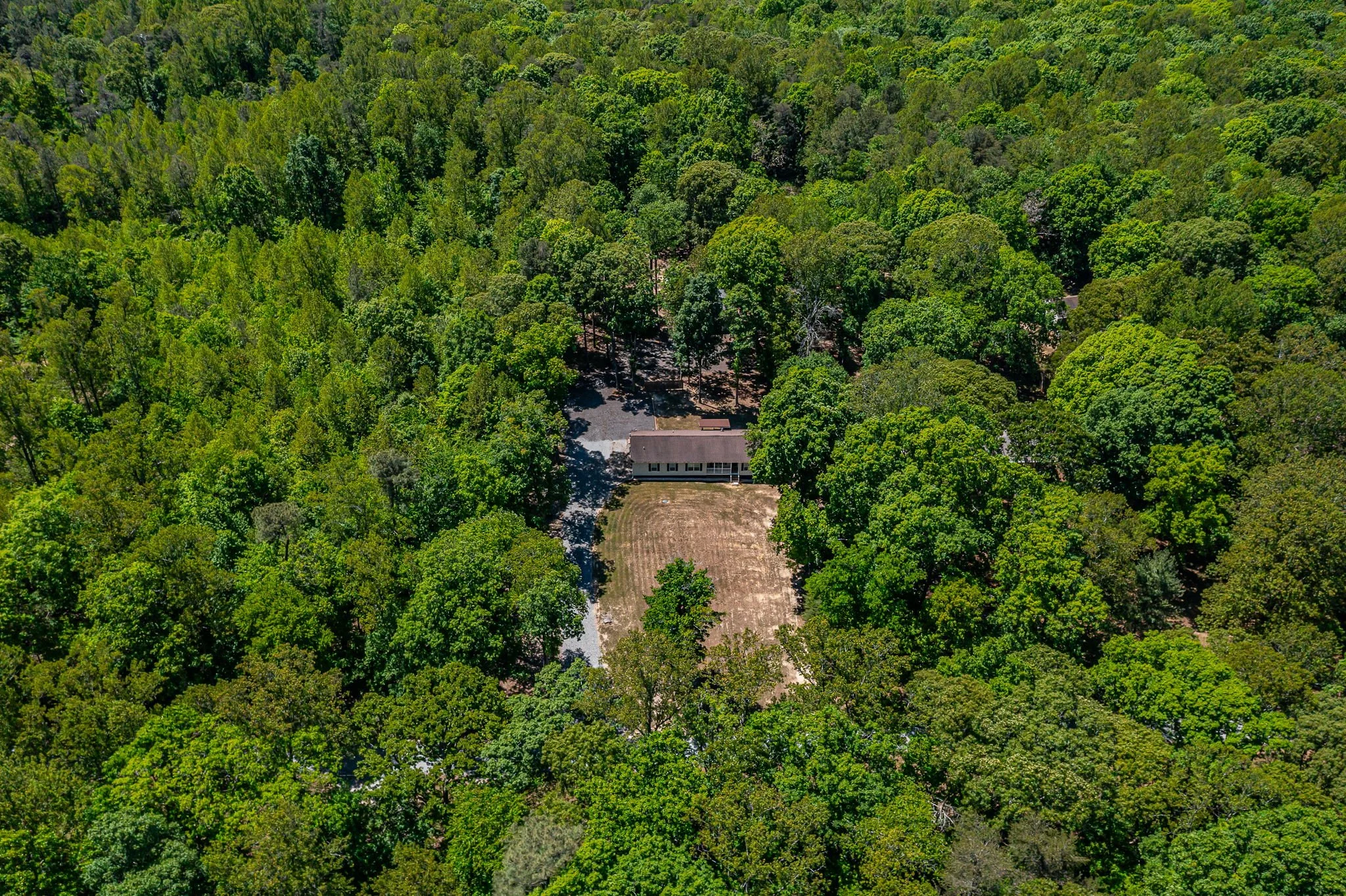
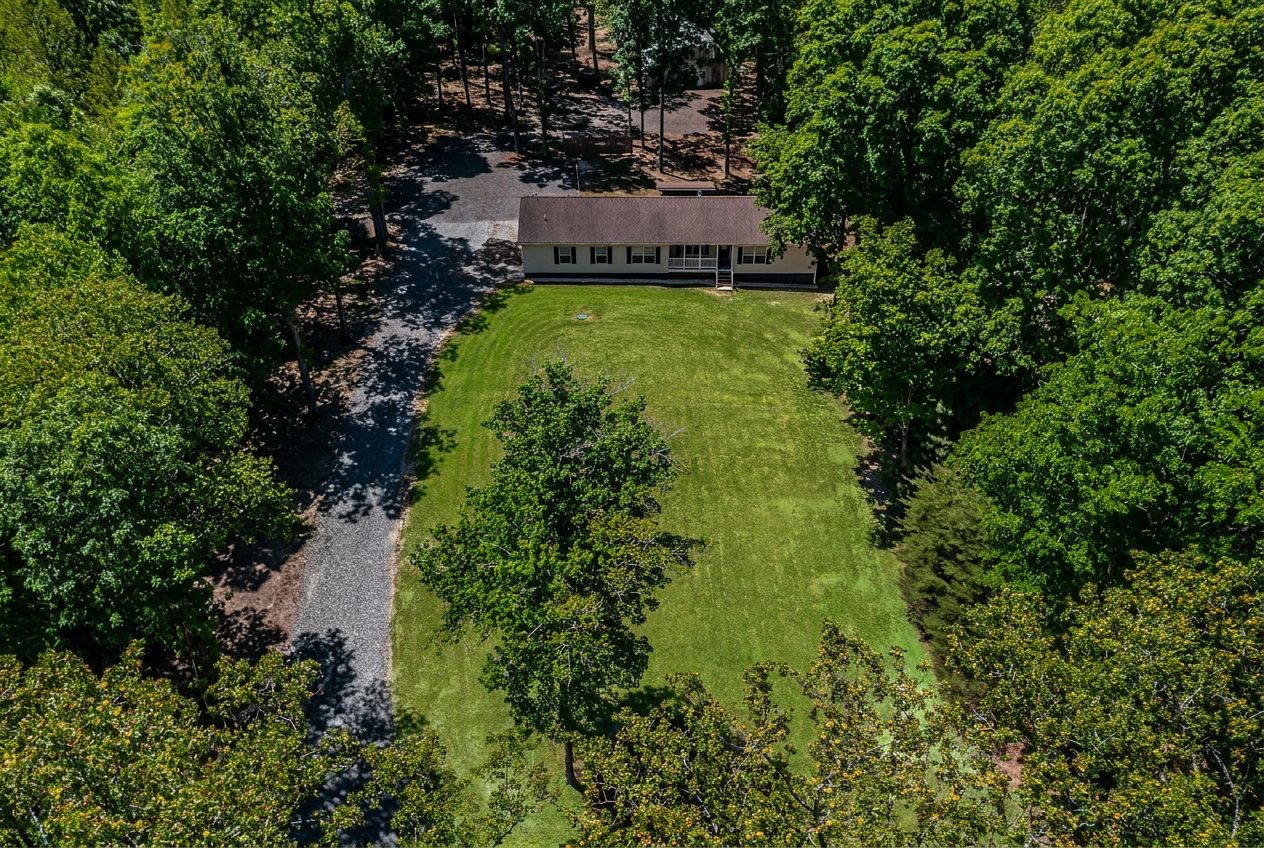
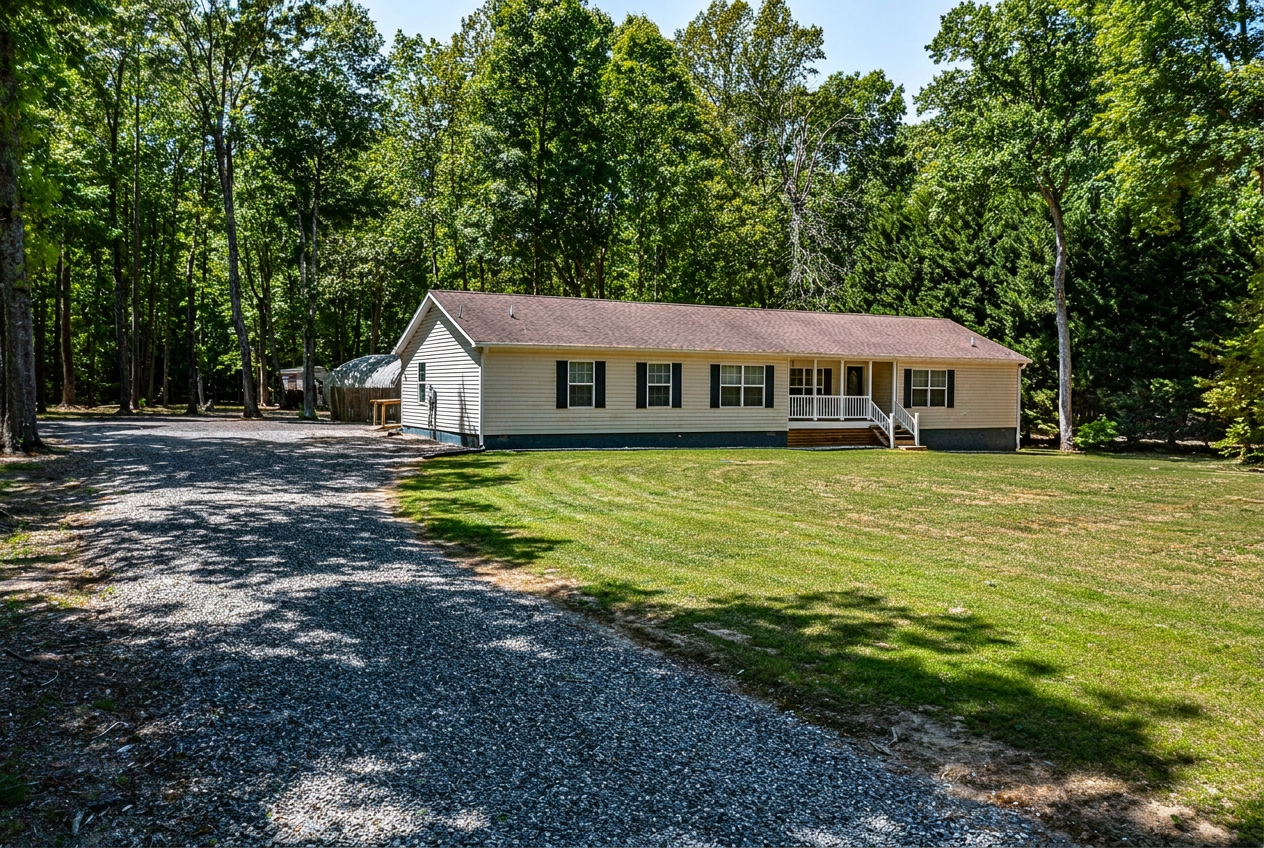
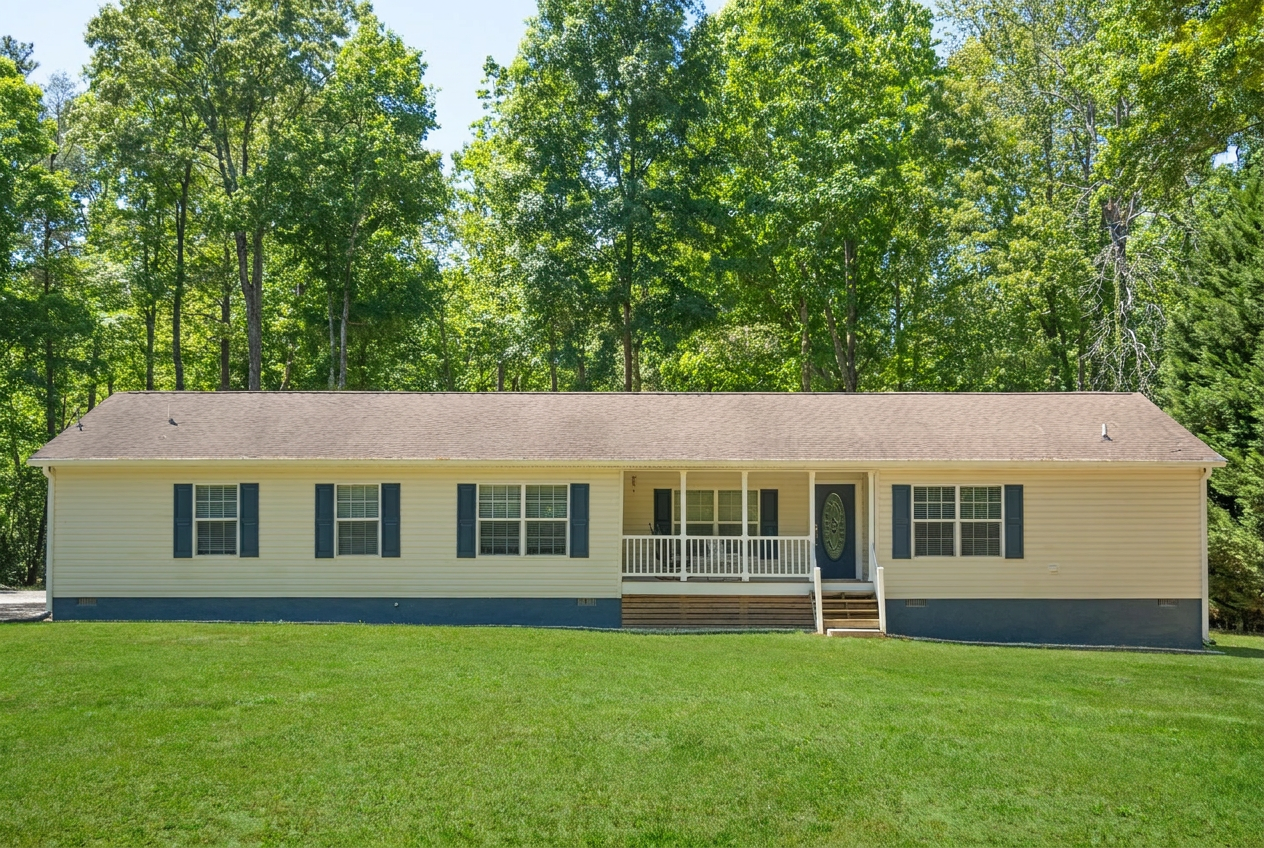
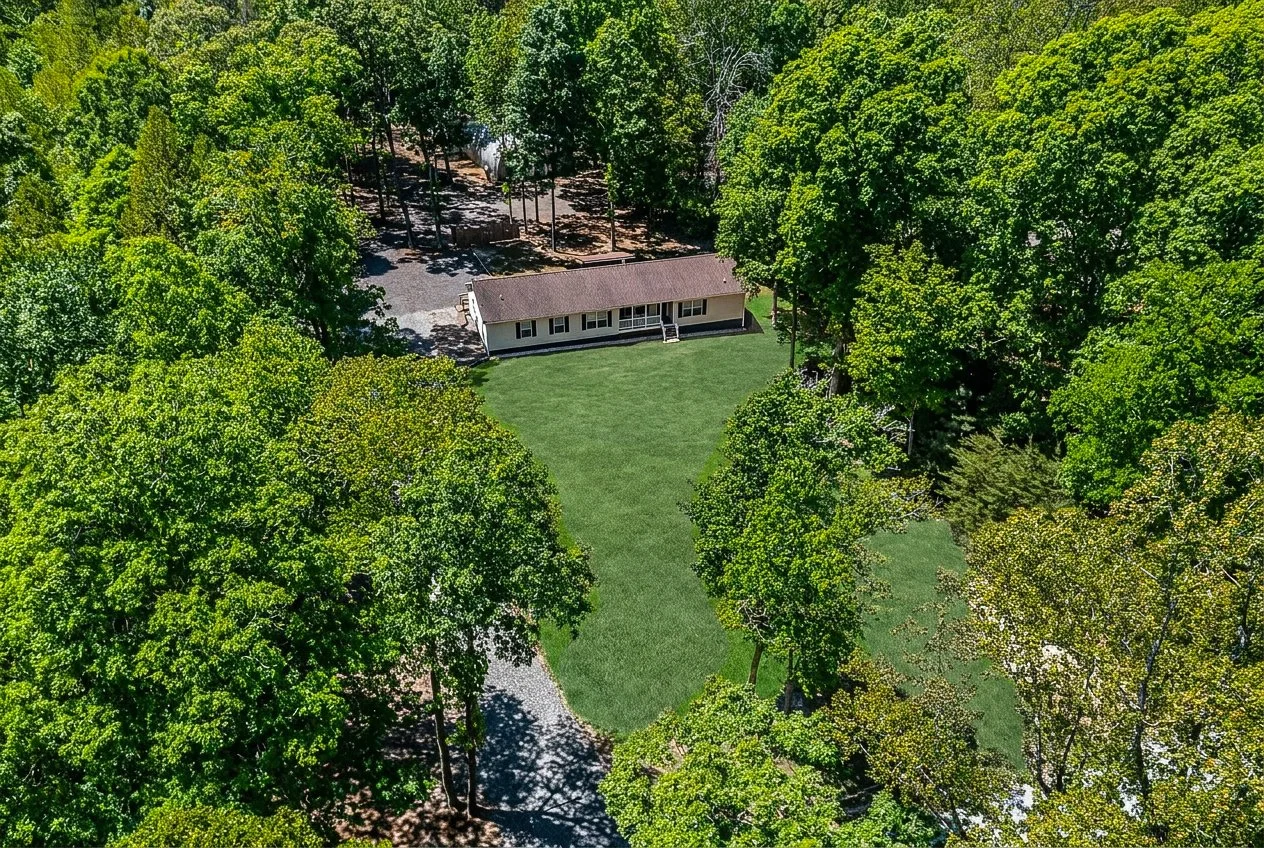
There is a moment, somewhere along the winding roads of Virginia’s Northern Neck, when the canopy closes overhead, and something in you quietly exhales. That feeling has a permanent address: 115 Edge Hill Lane in Heathsville. There is a particular quality of light in the early morning — soft, unhurried, filtering through a canopy of hardwoods that has taken decades to grow this tall. Here, that light arrives through windows on every side of the house, a reminder that this two-acre parcel is not merely a lot but a clearing — a deliberate pocket of open sky within a forest that wraps the property on three sides, offering the kind of natural privacy that no fence can replicate.
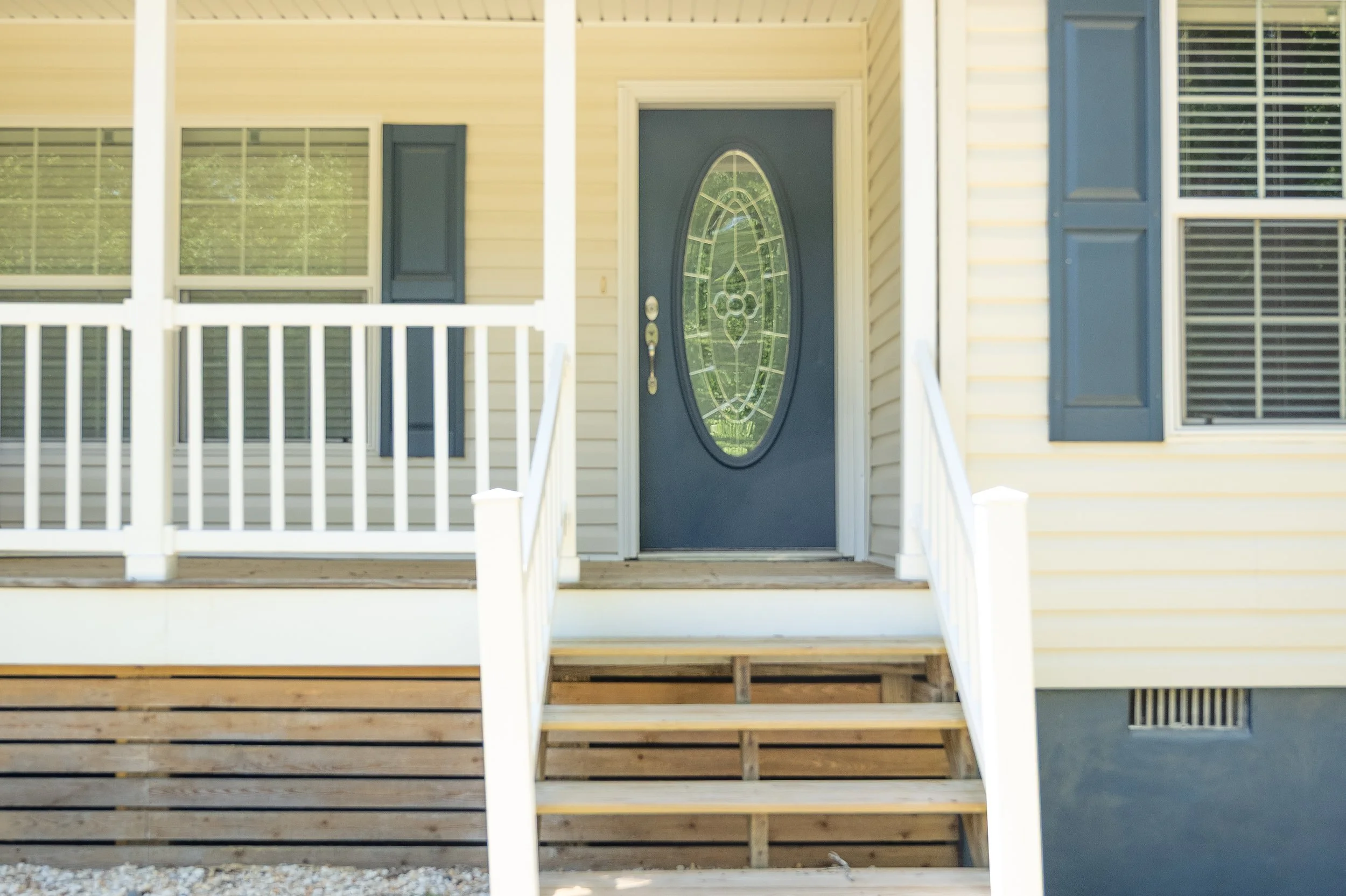
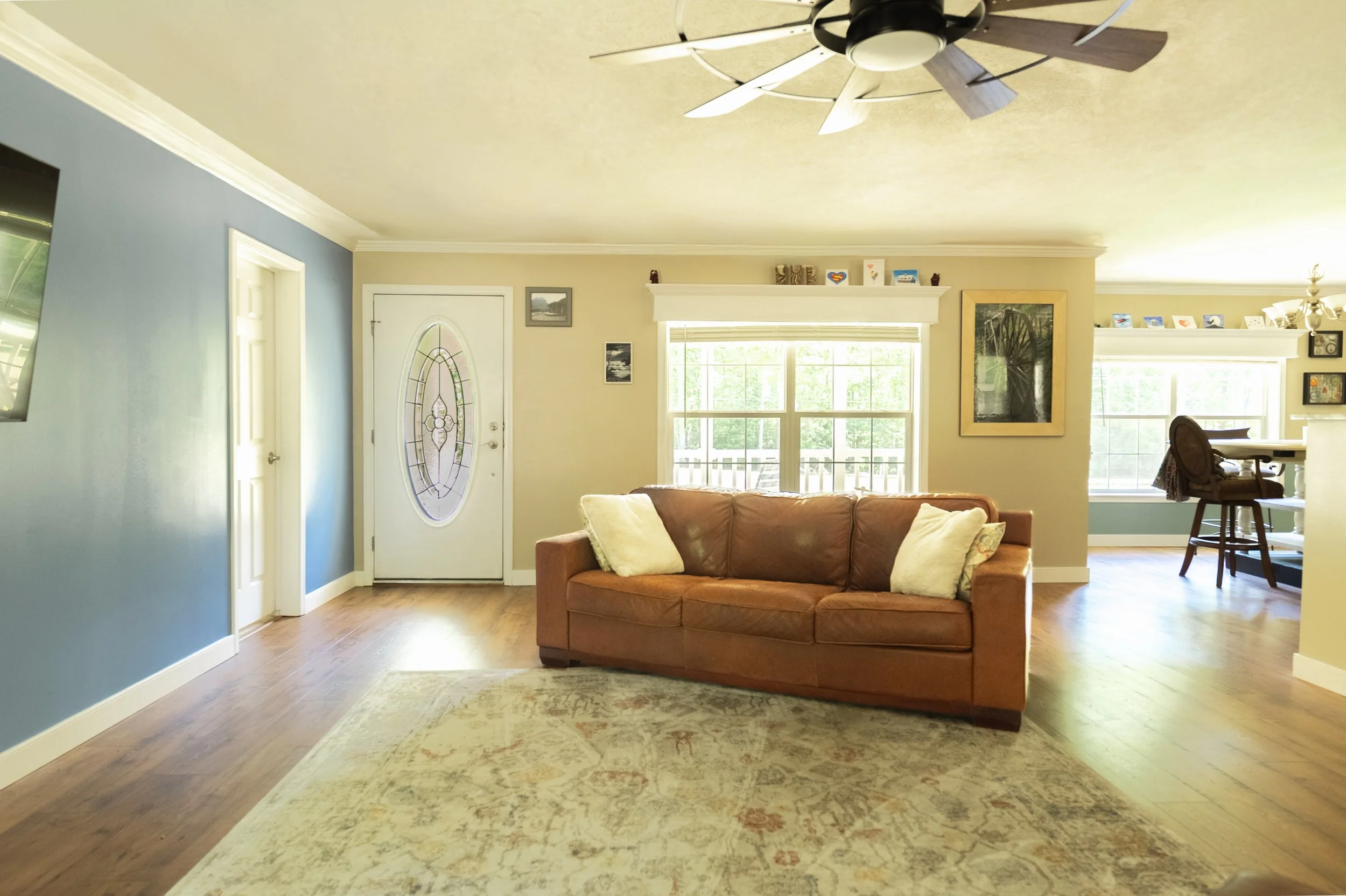
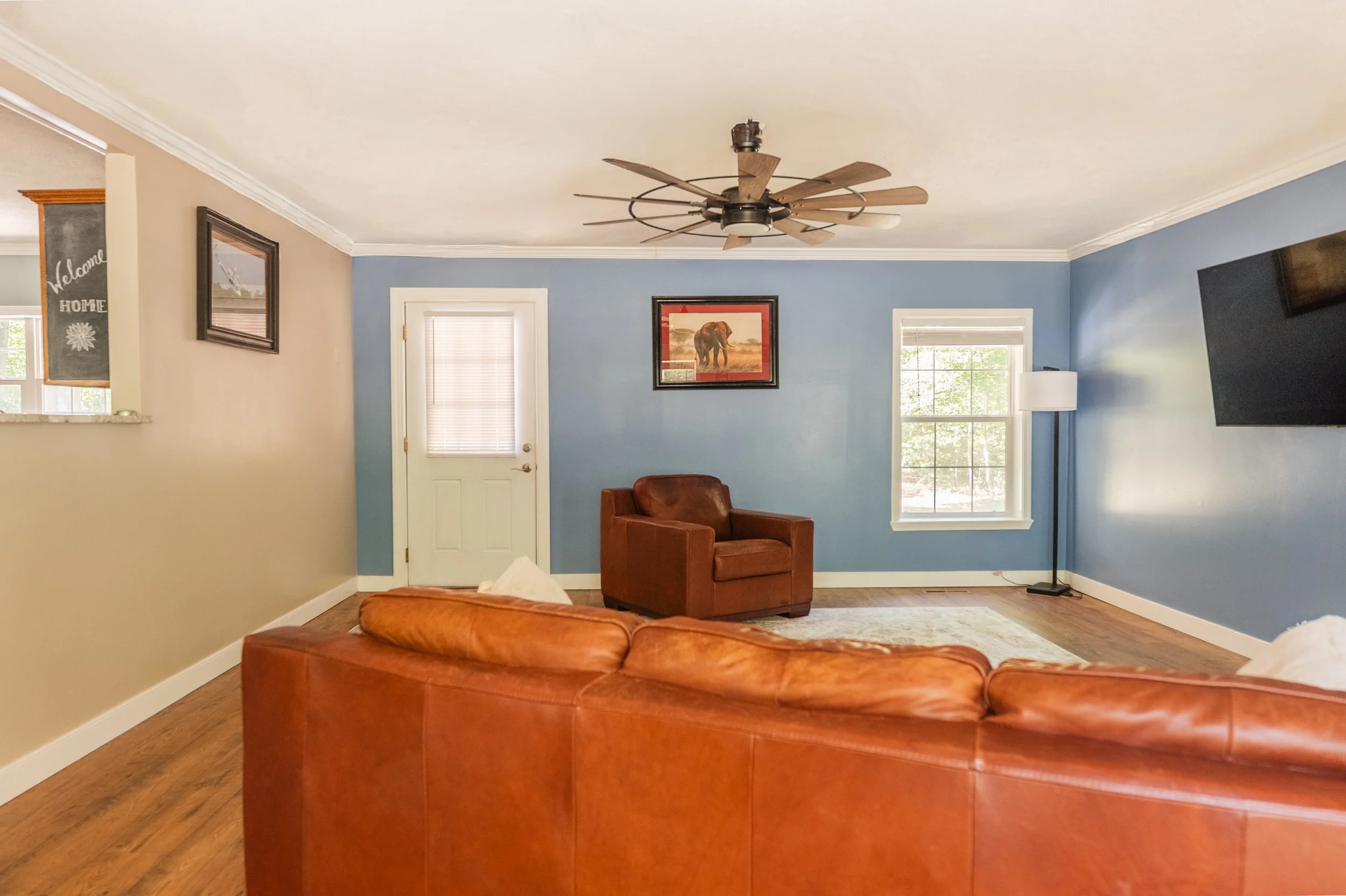
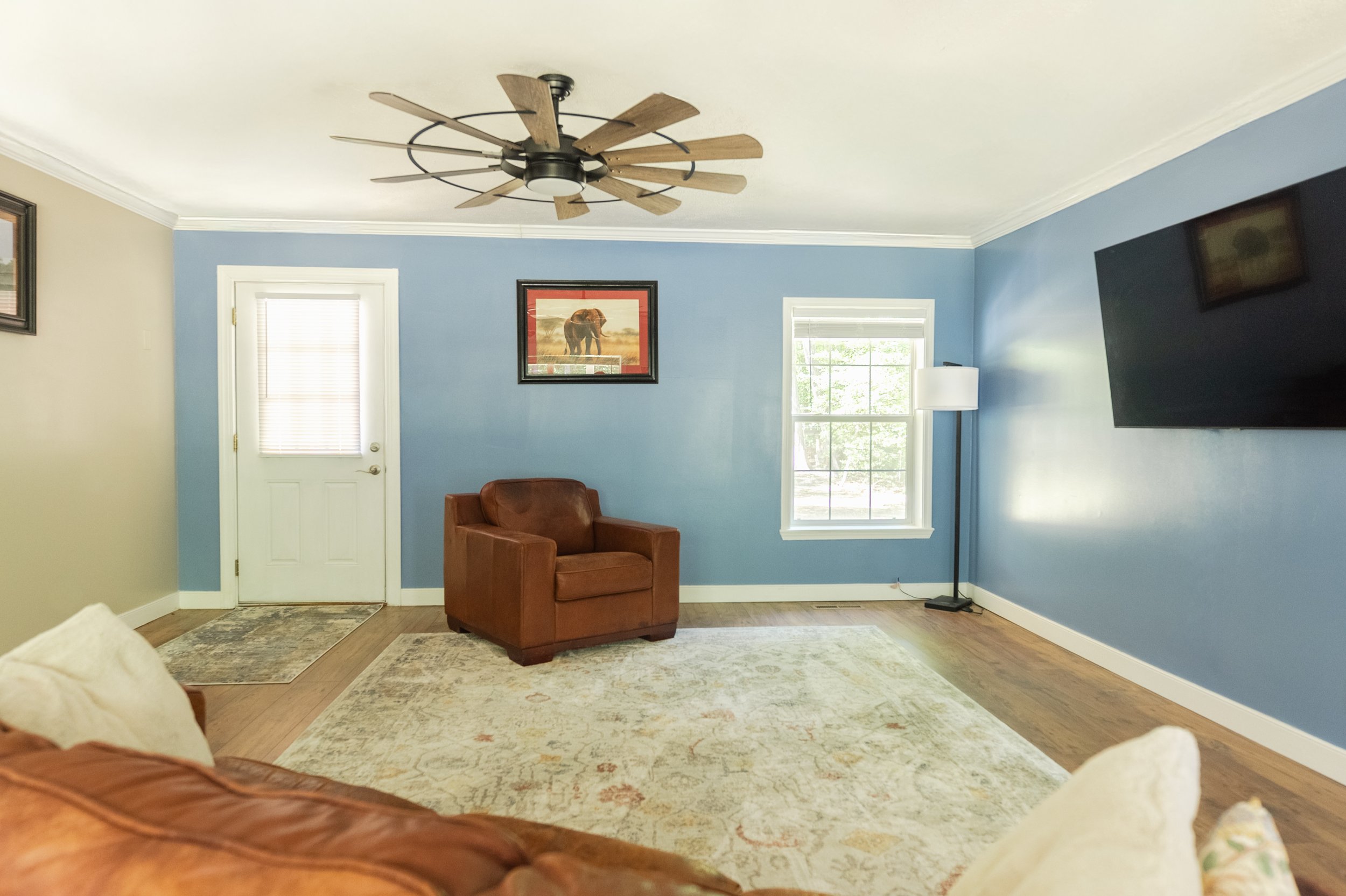

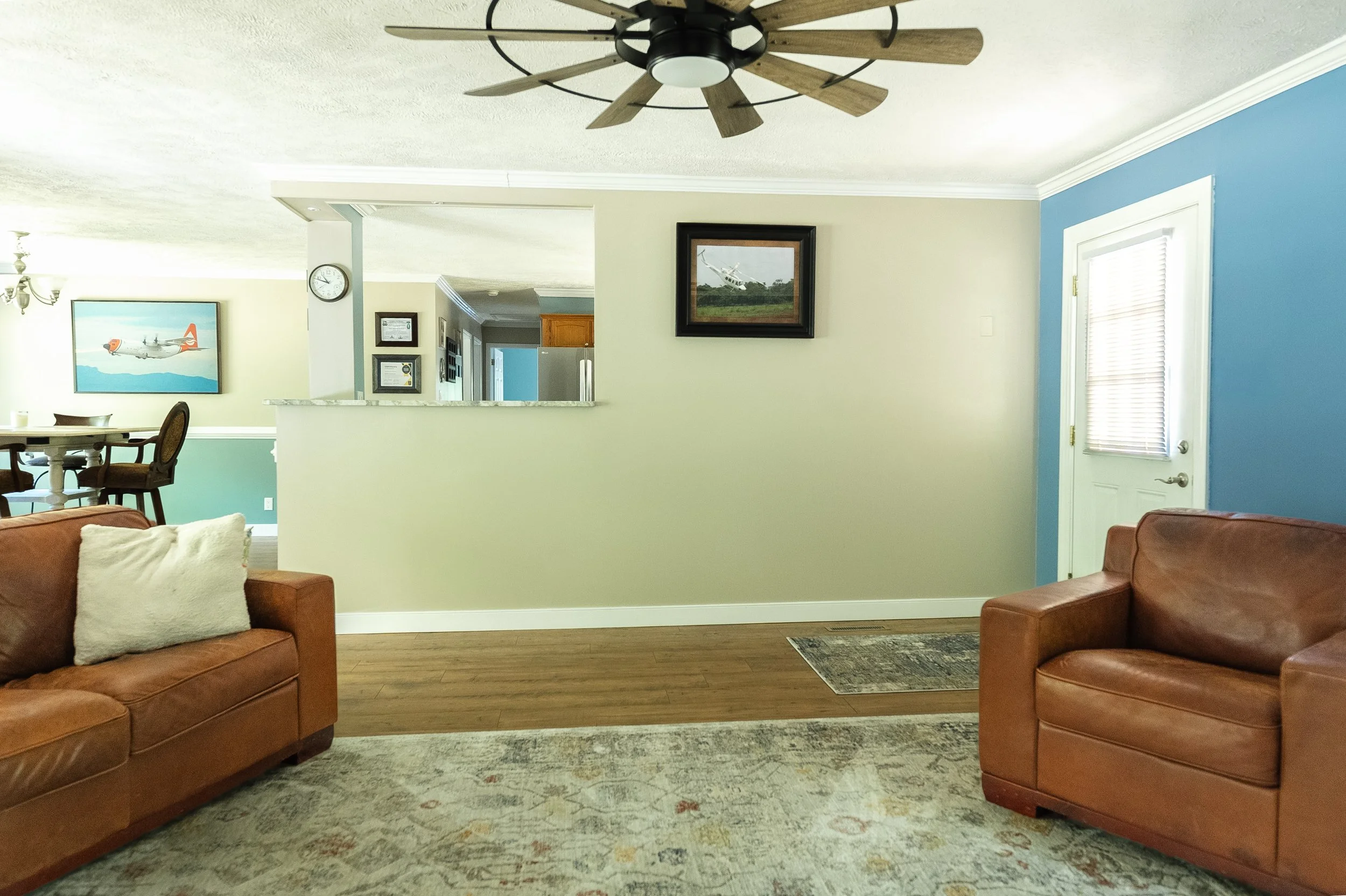
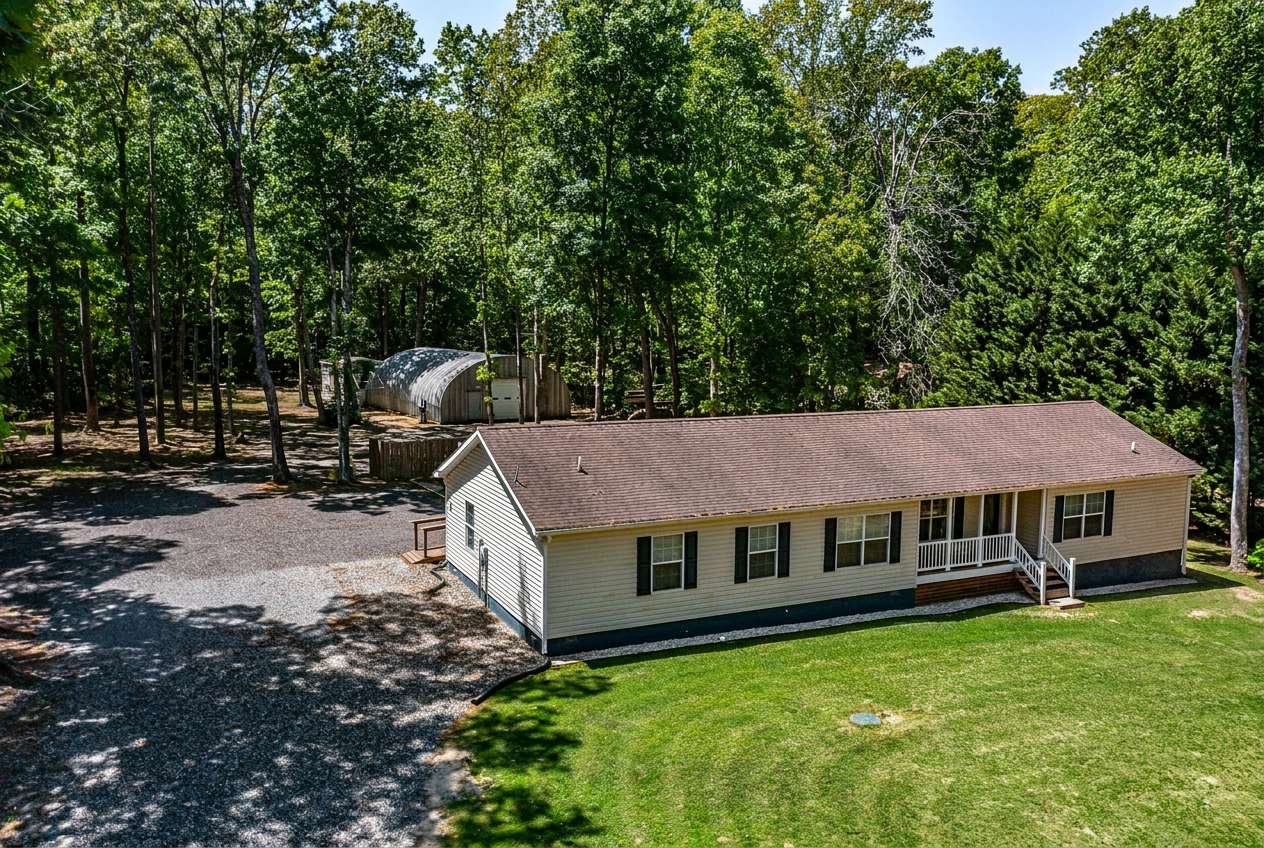
Set on two private acres within Northumberland County — where the Chesapeake Bay’s tidal creeks set the rhythm of daily life — this four-bedroom, four-bath home is designed for the way people actually want to live. The covered front porch stretches the full width of the facade, a proper Southern threshold that invites you to pause before entering. Painted columns frame a view of the lawn and tree line, and the deep overhang creates a sheltered room of sorts — a place for morning coffee in a rocking chair while the woods do their quiet work around you. In spring, the surrounding hardwoods leaf out in layered greens; in autumn, they turn the property golden. The porch is a front-row seat to all of it. The single-story floor plan spans 2,054 square feet in a long, unhurried sweep, with living areas flowing together openly at the center. A generous, light-filled living room offers a space that feels both considered and comfortable. Hardwood floors, a glass front door, and windows framing the surrounding tree canopy complete a room that earns its name.
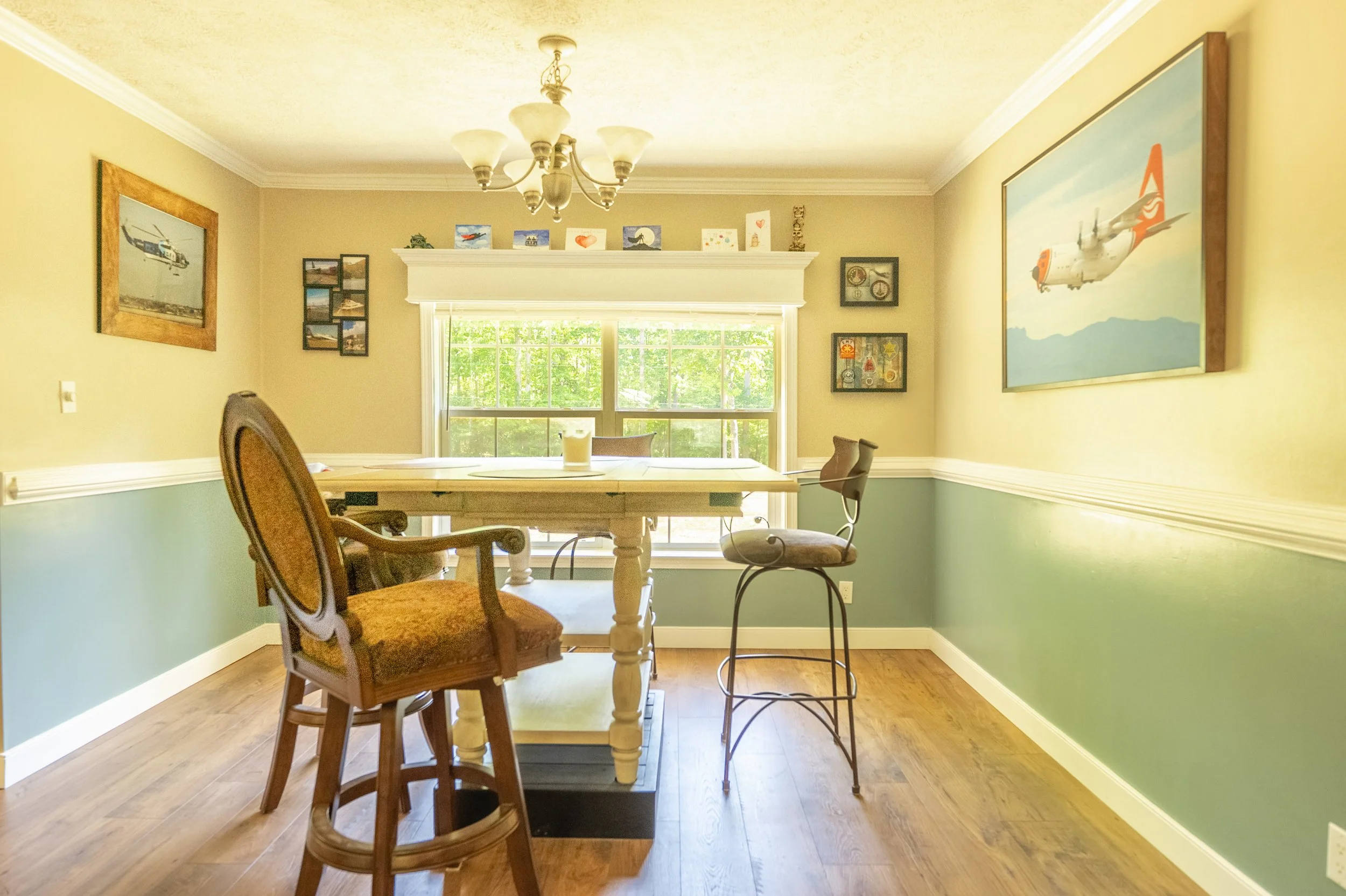
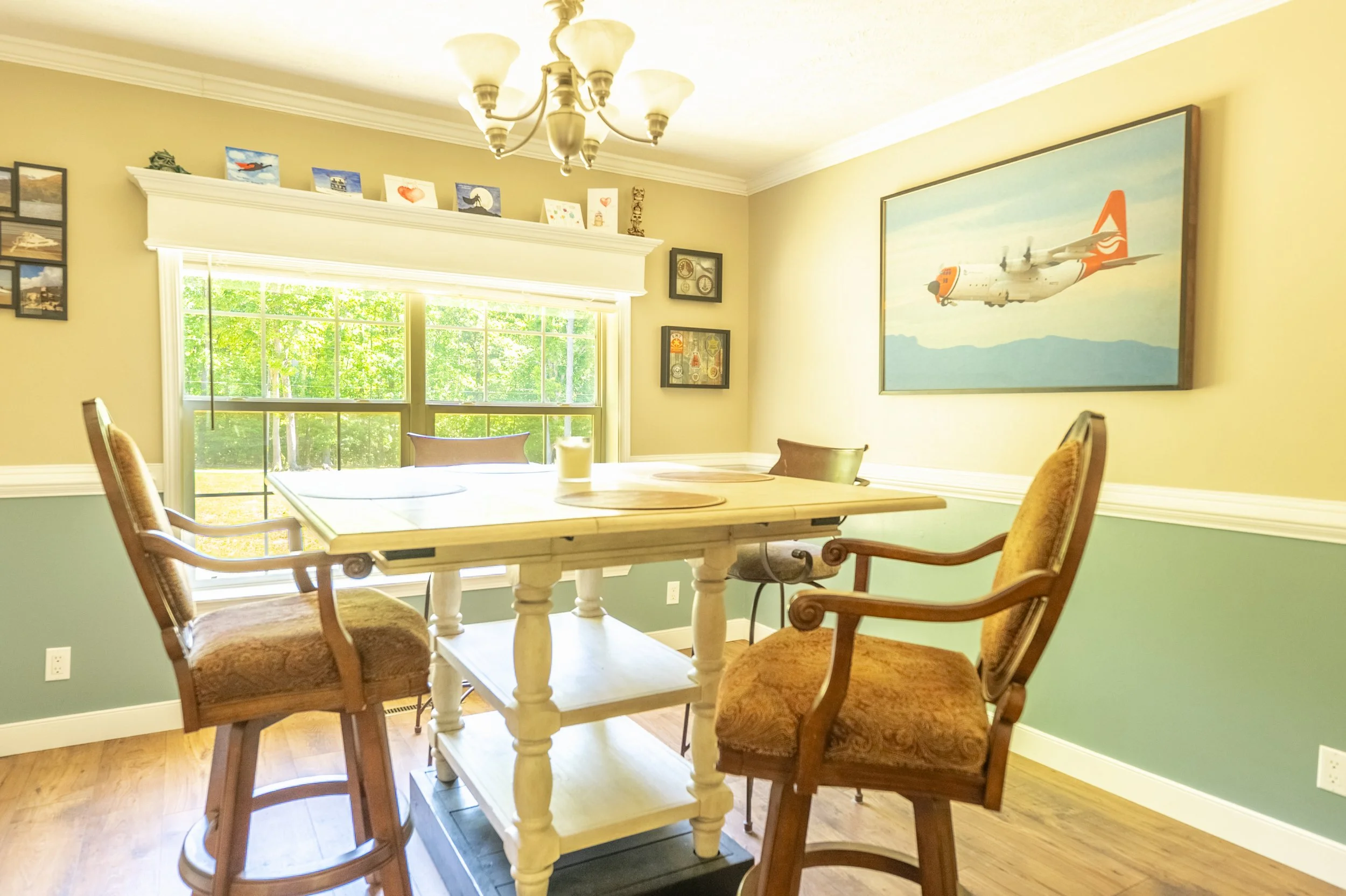
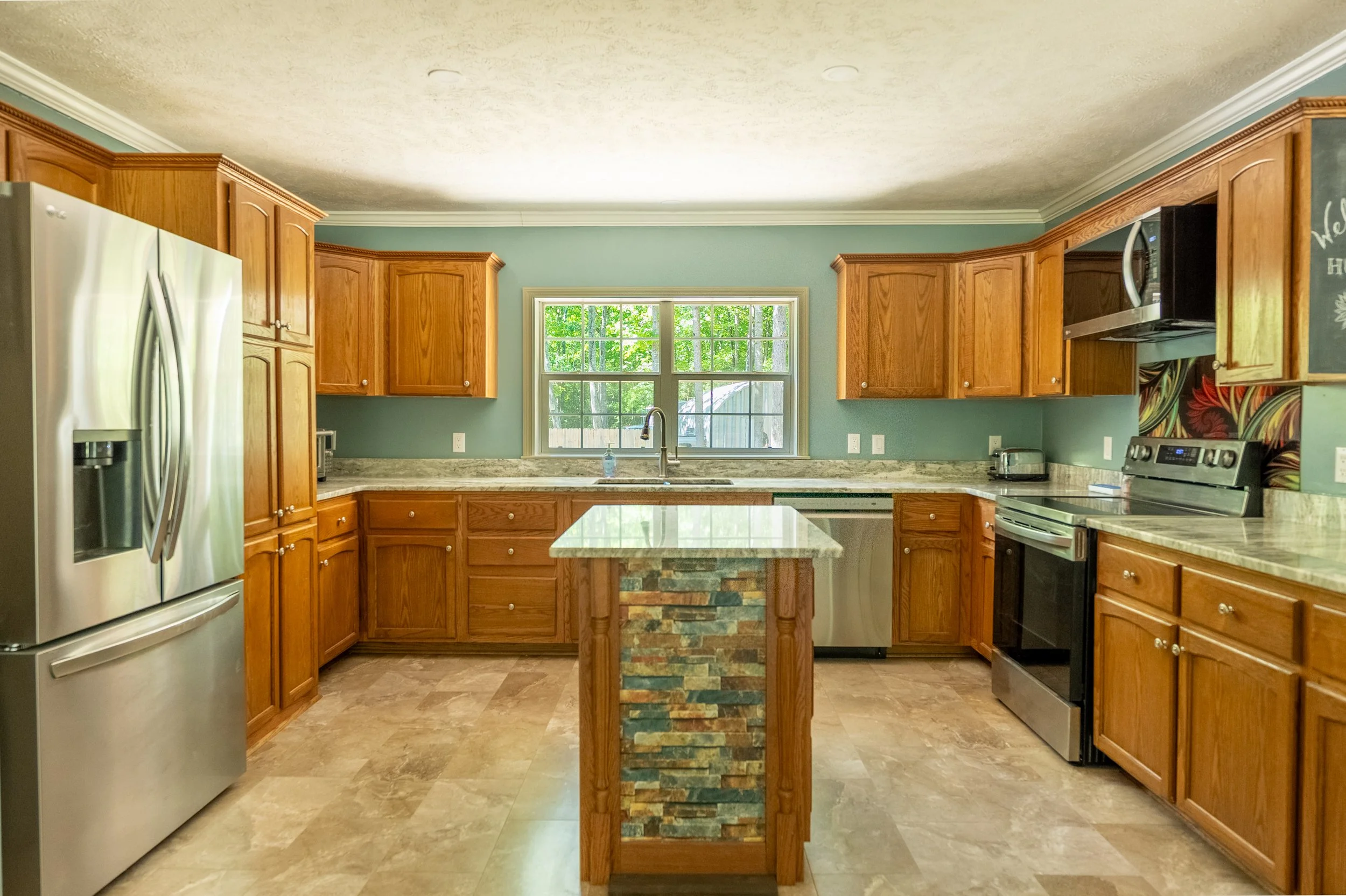
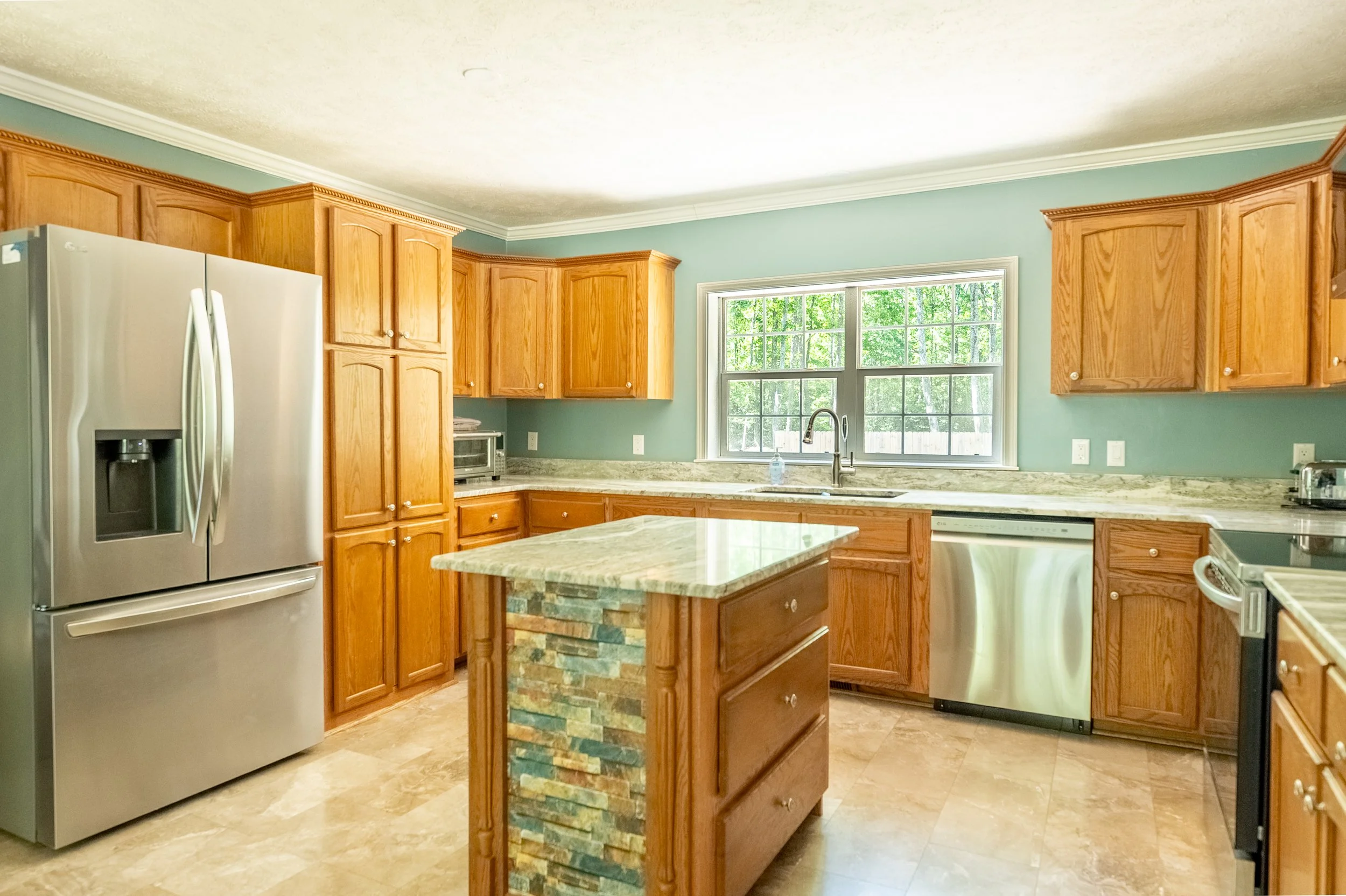
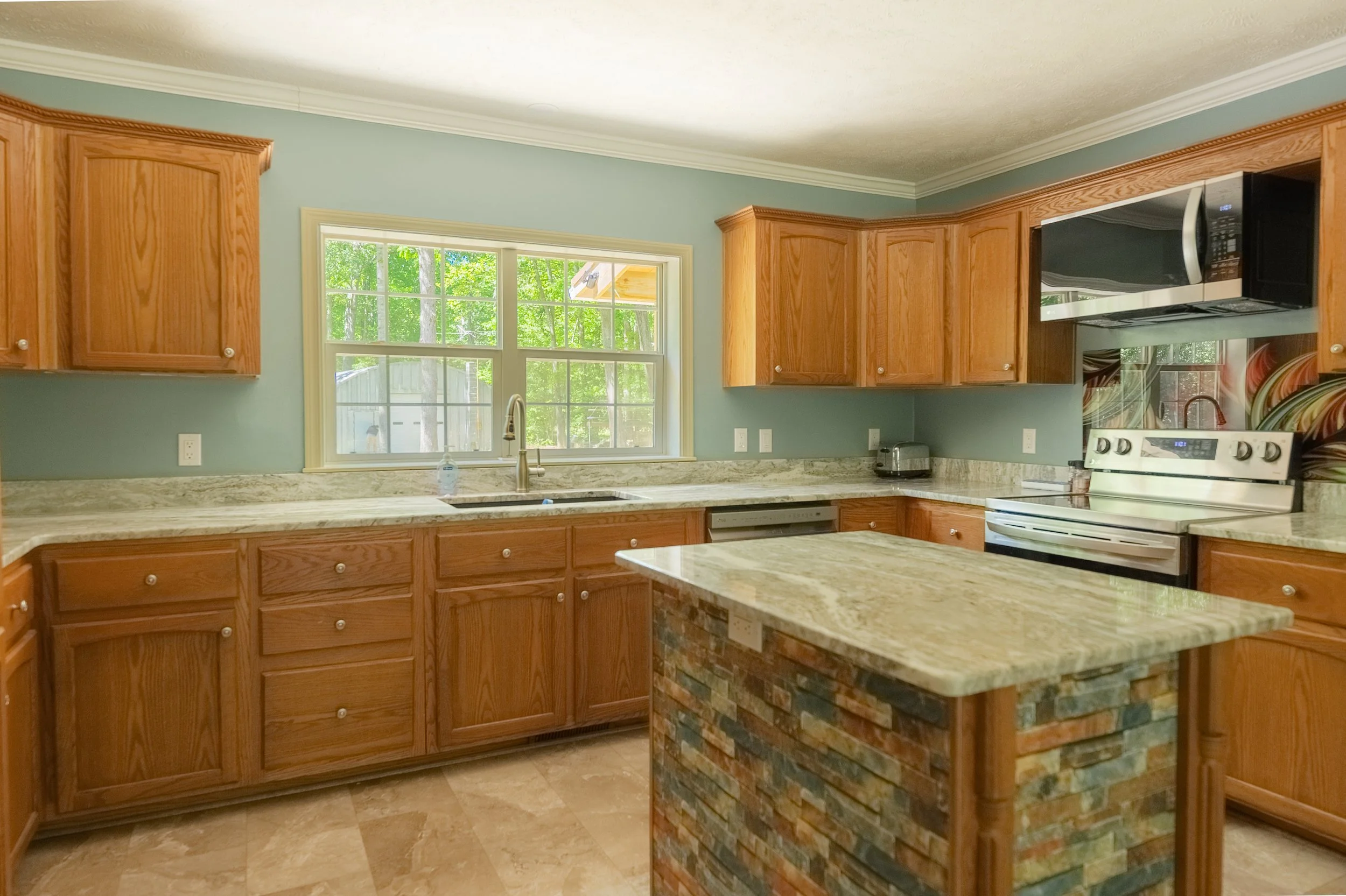
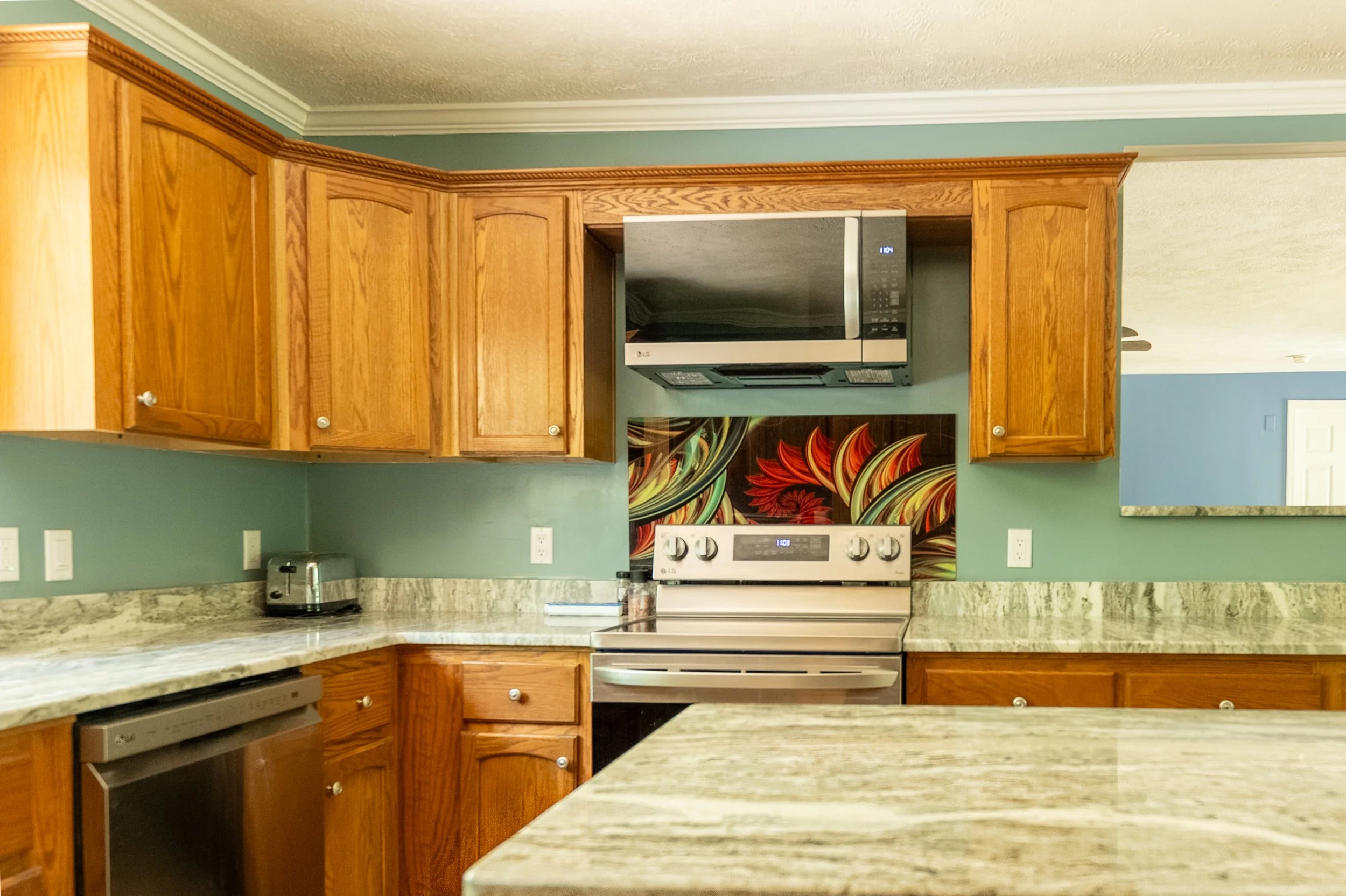
The dining room and kitchen share a wall and a palette but serve distinct design purposes; the transition between them is handled with care. A pass-through bar to the living room — its counter topped in the same granite as the kitchen — defines the boundary without closing it, allowing light and conversation to move freely between cooking and entertaining while preserving each room’s spatial identity.
The dining room is the more formally articulated of the two. A continuous chair rail divides the walls horizontally, a classical device that gives the room its sense of proportion and signals that this space was designed with intention. Crown molding completes the envelope at the ceiling line, and the picture window — framed within its own oversized architectural surround, complete with a deep display ledge above — functions less as a window than as a composed focal point, bringing the tree canopy inside while anchoring the wall with the weight of a proper architectural element.
The kitchen operates on a different logic: generous, workmanlike, and uninterrupted. The cabinetry rises to the full height of the crown molding, with no soffit, no gap, and no wasted vertical space — a decision that speaks to serious storage and gives the room a taller, more resolved feeling than its floor plan alone would suggest. The U-shaped layout with center island creates a natural hierarchy of movement, the island anchoring circulation without impeding it. A large picture window over the sink provides the room’s only exterior view and its best natural light — positioned exactly where a cook would want it, facing the yard and the trees beyond.
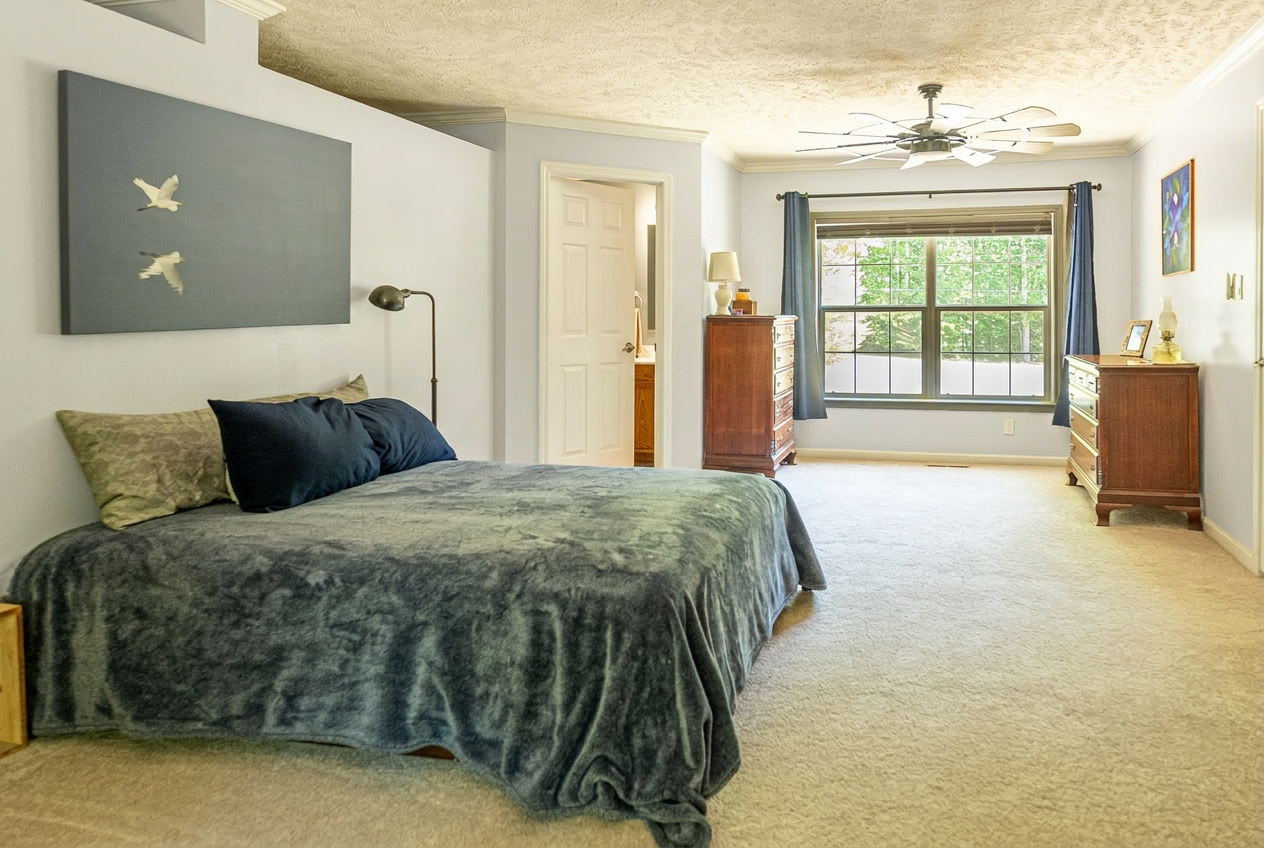



The primary bedroom is a genuinely large space, with proportions generous enough to accommodate a king bed while still leaving ample open floor space. Crown molding runs the full perimeter, a large window with gridded panes anchors the far wall, and frames a private view of the tree canopy.
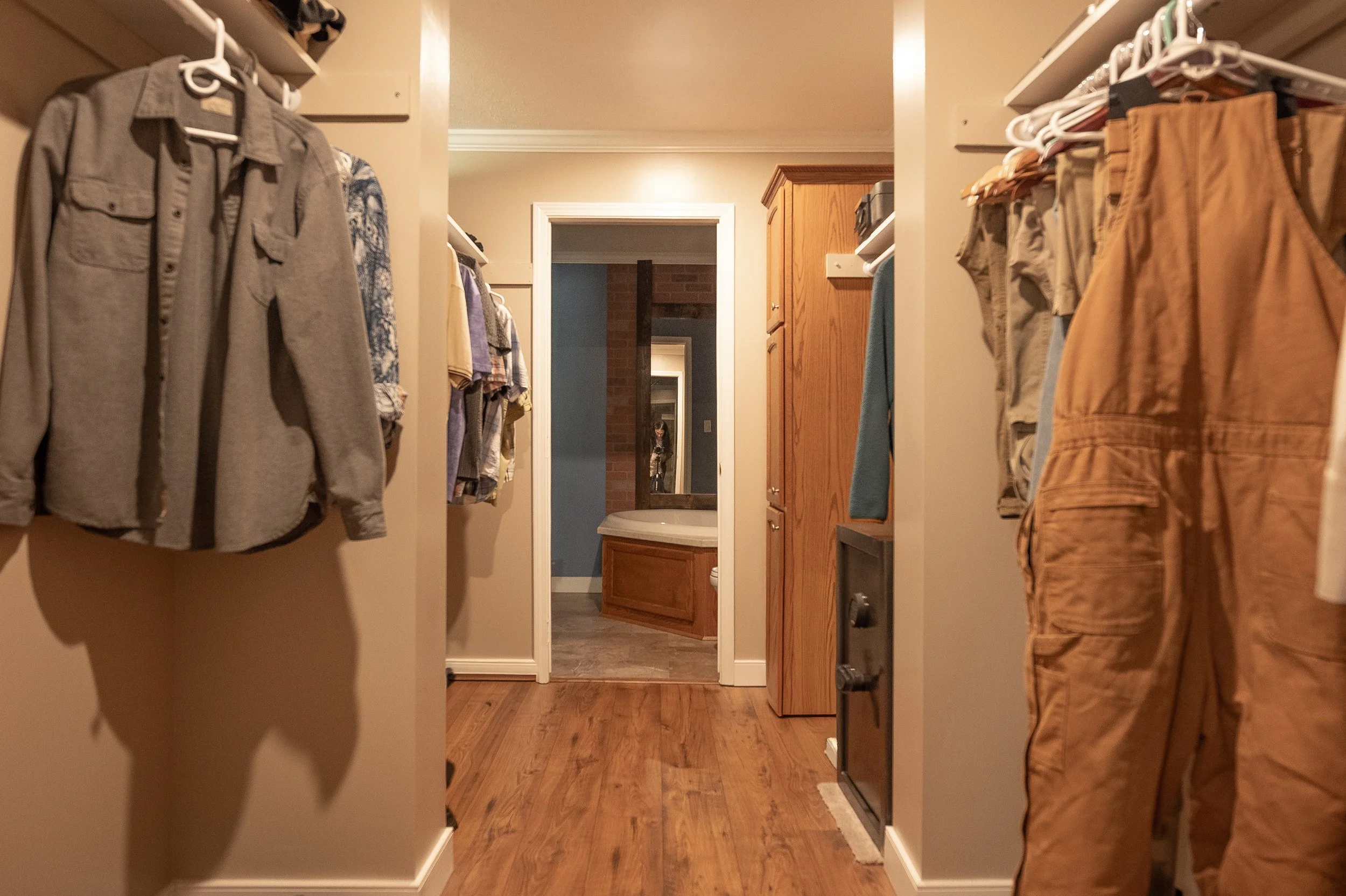
The element that distinguishes this suite is the walk-in closet corridor — a proper passageway with hardwood floors, double hanging rods running the full length on both sides, and enough depth to function as a genuine dressing room rather than an oversized cupboard. It serves as the connection between two bathrooms, a decision that gives the suite an almost hotel-like logic: everything private and everything necessary, arranged in a single uninterrupted procession.
The two bathrooms that anchor either end of the closet are distinct. One bathroom commits fully to atmosphere — brick surrounds the corner soaking tub, stained timber frames flank the mirror above it in a gesture that is frankly rustic and entirely deliberate, the blue walls deepening the room’s sense of enclosure. The second bath takes the opposite approach: cool sage, a frameless glass walk-in shower lined in large-format stone tile, clean and functional without apology. Together they offer what the best primary suites always do — a choice about how you want to begin the day.

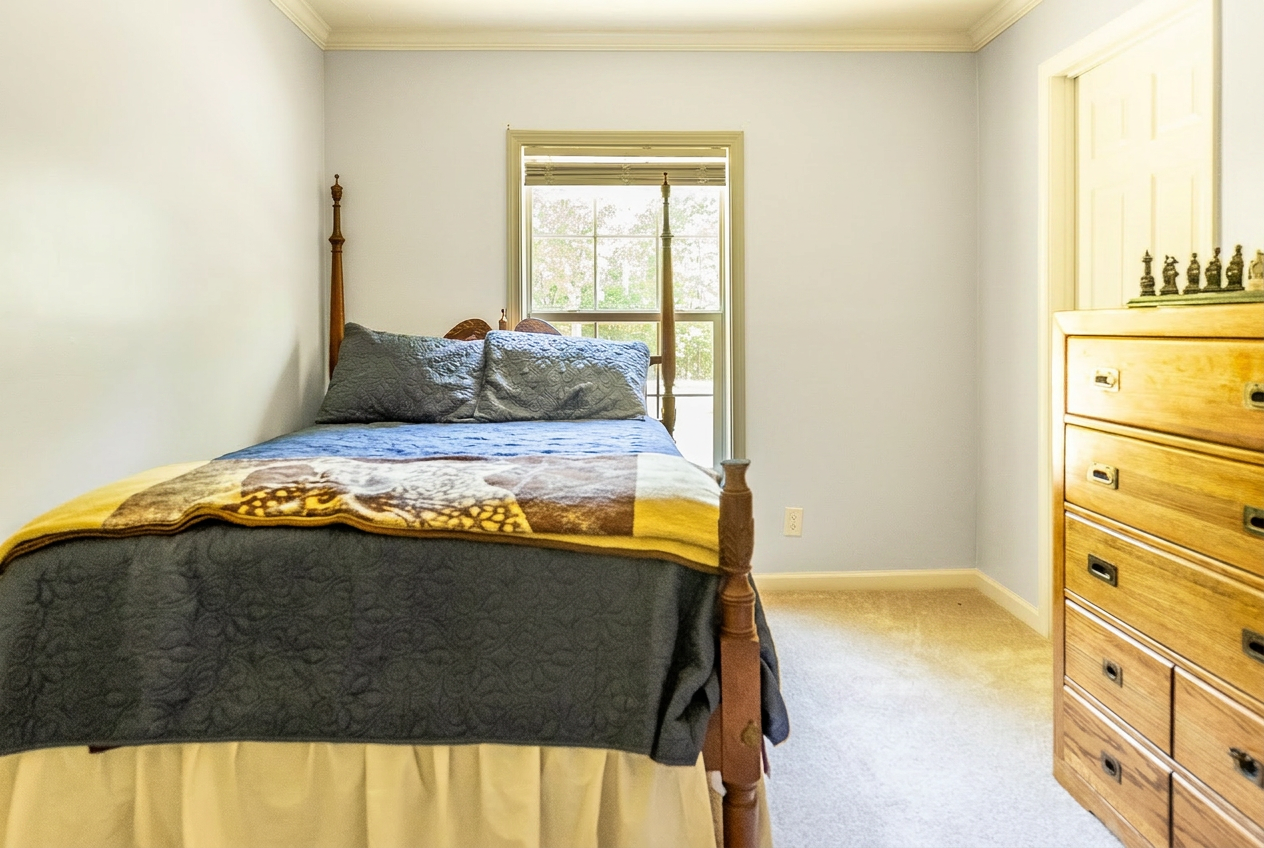
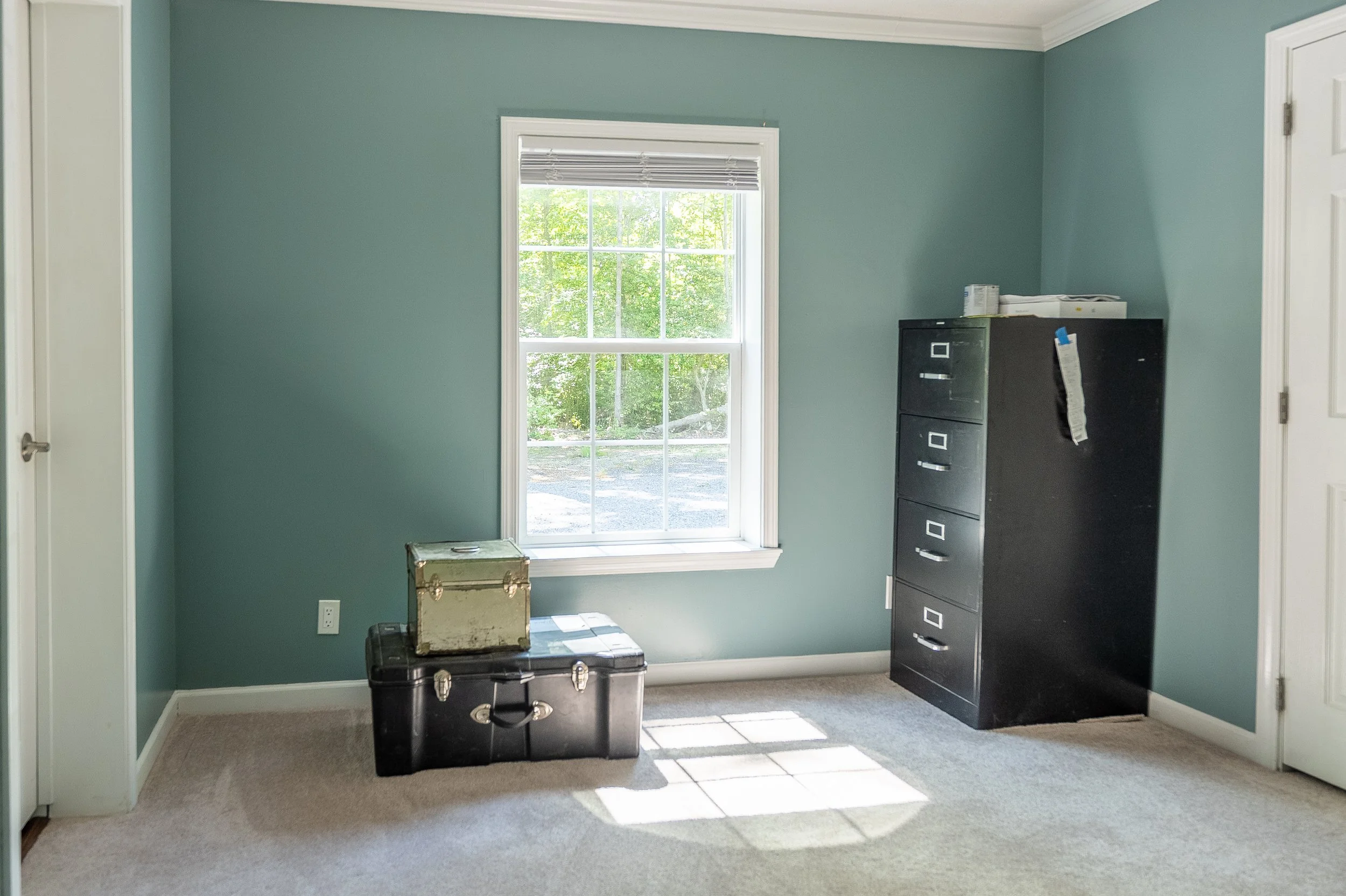
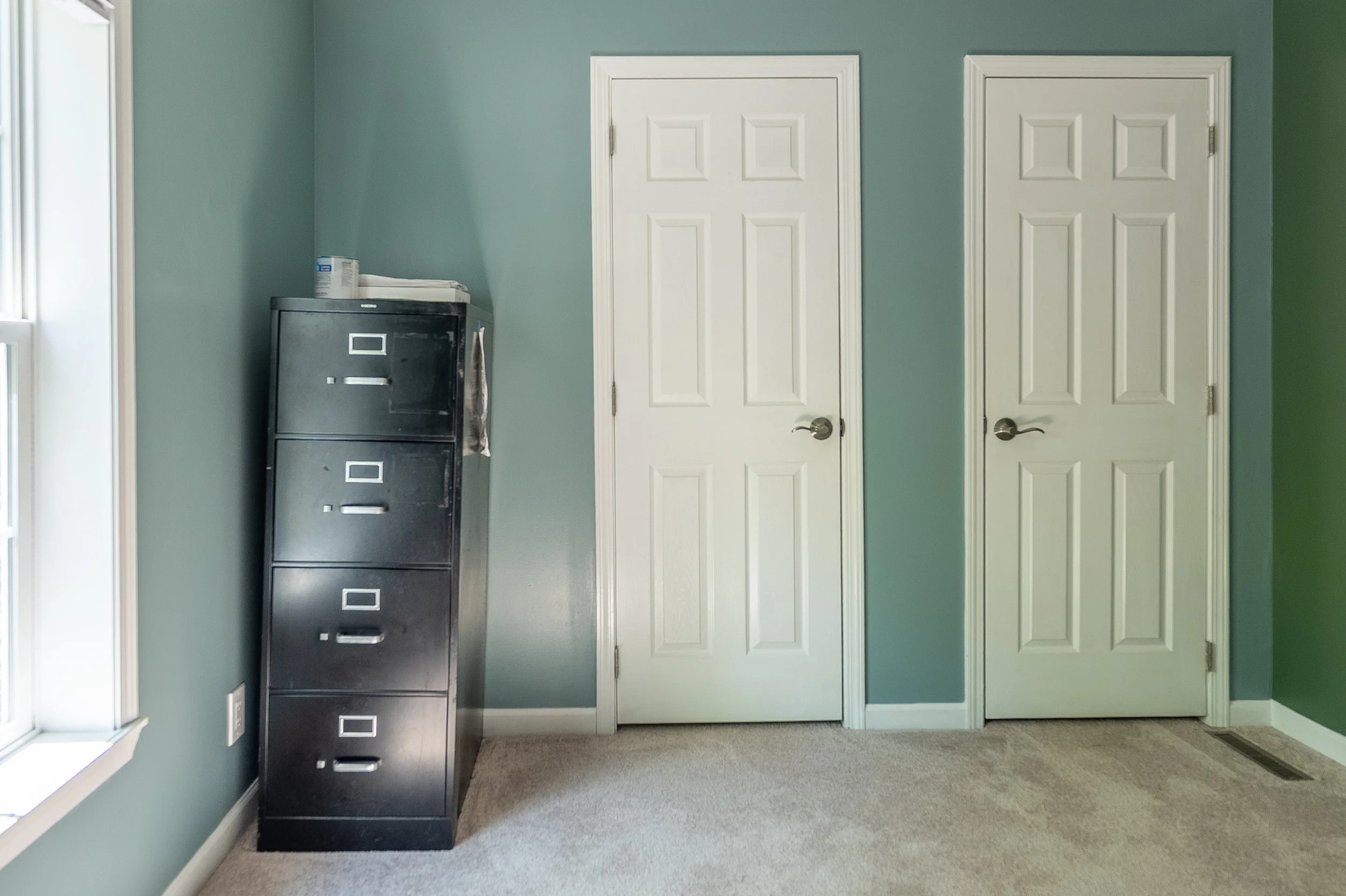


The guest wing offers three bedrooms, each finished with crown molding and neutral carpet that reads warm underfoot — a consistent design vocabulary that unifies the private quarters while allowing each room its own distinct character. Two of the bedrooms catch generous light through their double-hung windows — a quiet luxury that no amount of interior dressing can replicate. The third guest room features two side-by-side closets and generous natural light from dual exposures, making it equally suited as a bedroom, a home office, or a combination of both. All three rooms carry the same confident crown molding profile and six-panel door detailing that runs throughout the house, giving the guest wing a coherence that feels considered rather than merely functional.
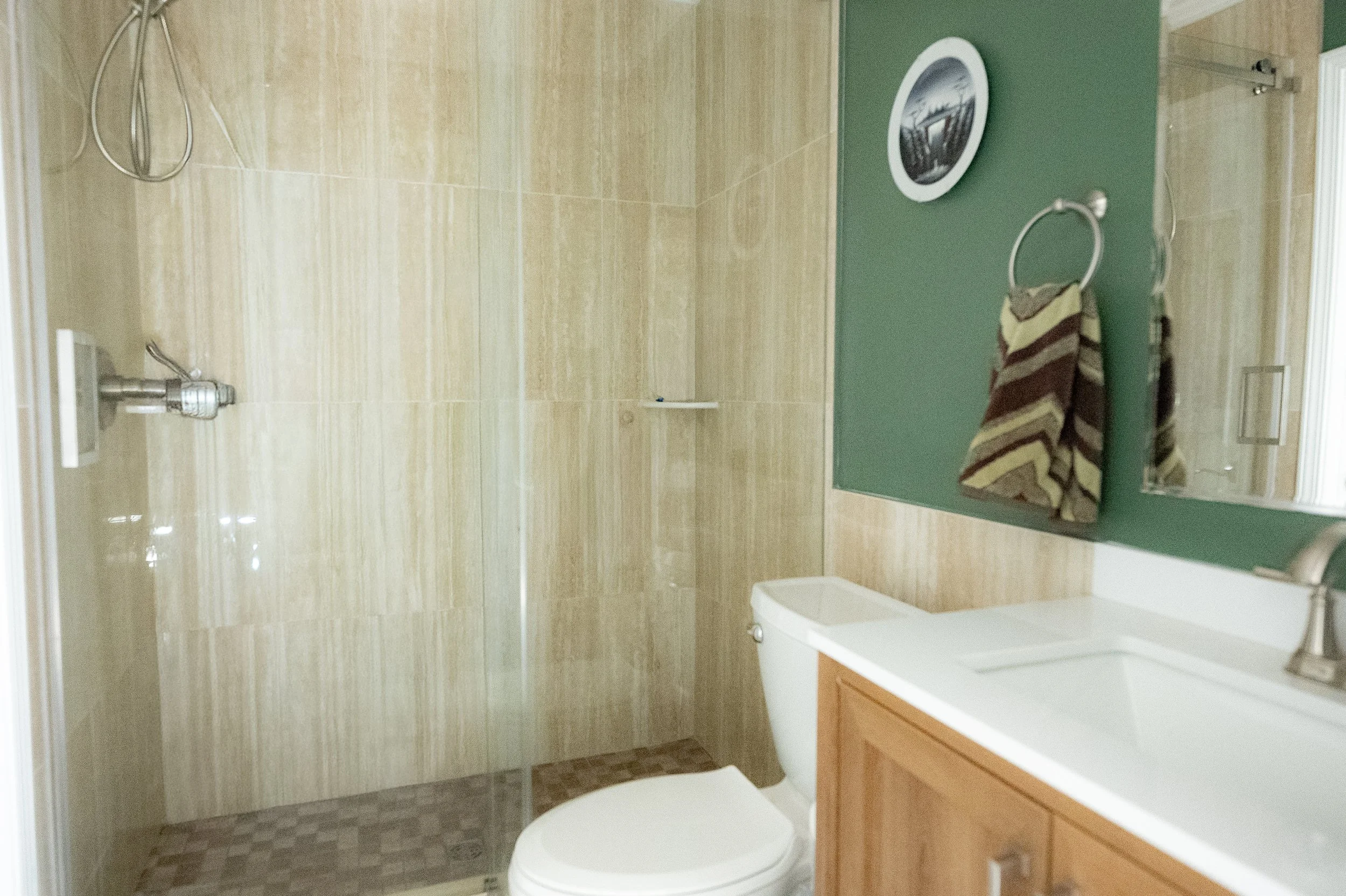
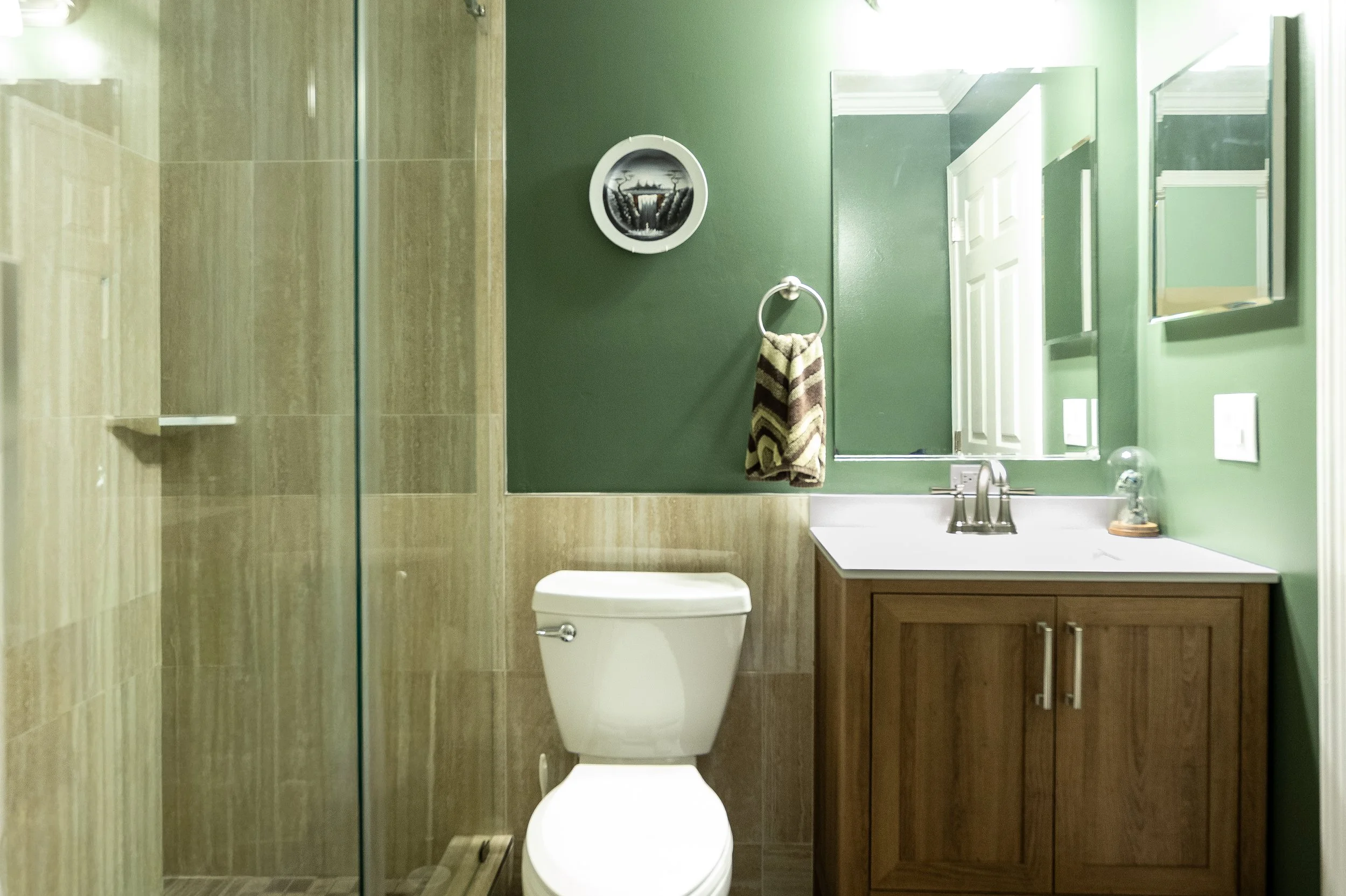
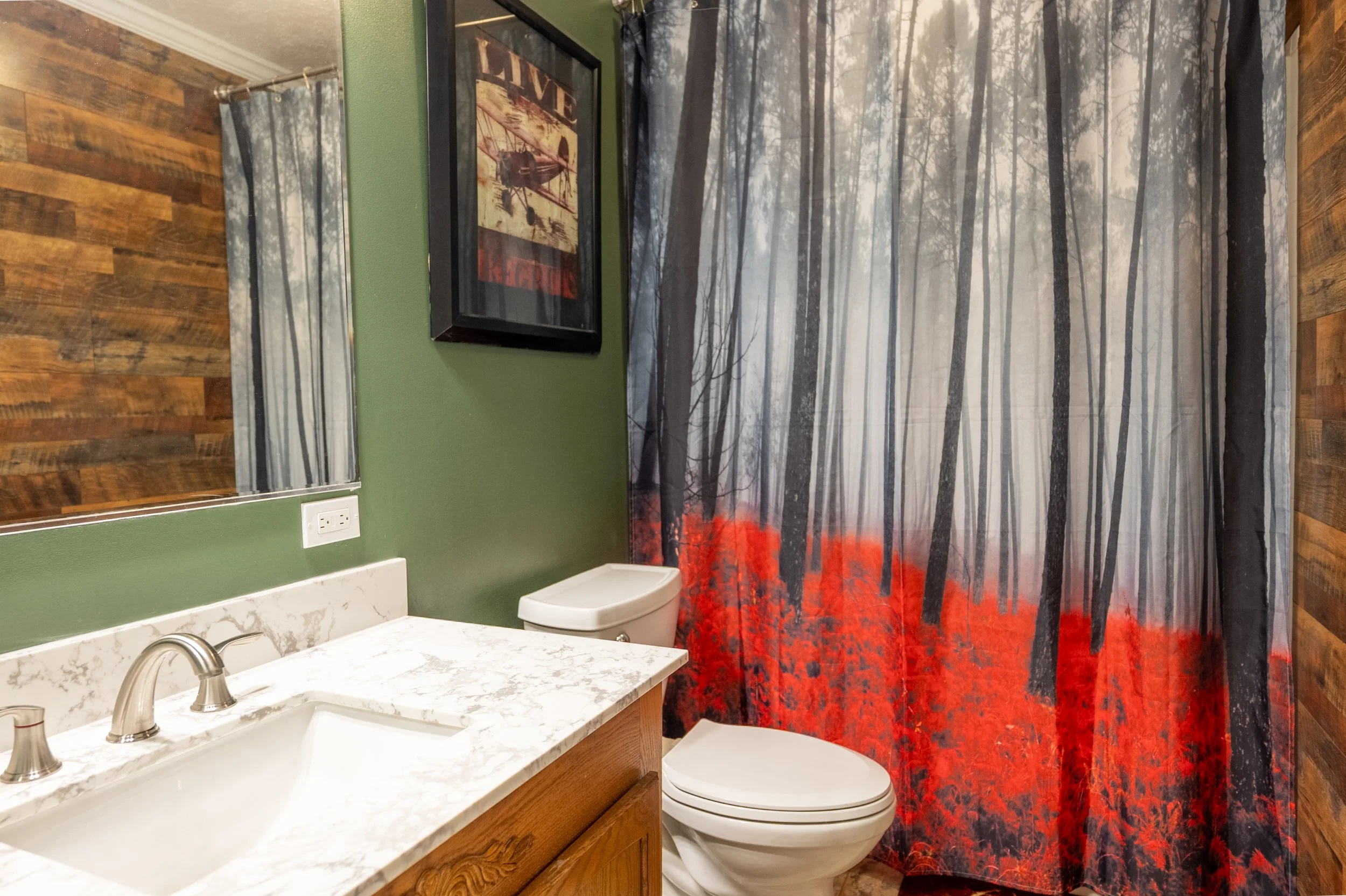
The two guest bathrooms take notably different approaches to their finish palettes, and both are the better for the contrast. The first is anchored by a dramatic reclaimed-wood plank wall — wide-plank boards in a rich, variegated brown that read as a full accent installation rather than an afterthought — and a marble-look vanity countertop with brushed-nickel fixtures. It is a room with personality. The second bath is more refined in its material language: floor-to-ceiling travertine-look tile envelops the oversized walk-in shower, enclosed by a frameless glass panel that keeps the sightlines clean and the room feeling expansive. A walnut-toned vanity cabinet with brushed nickel pulls and a white undermount sink completes a palette of warm stone, cool glass, and rich wood that holds together with quiet elegance.
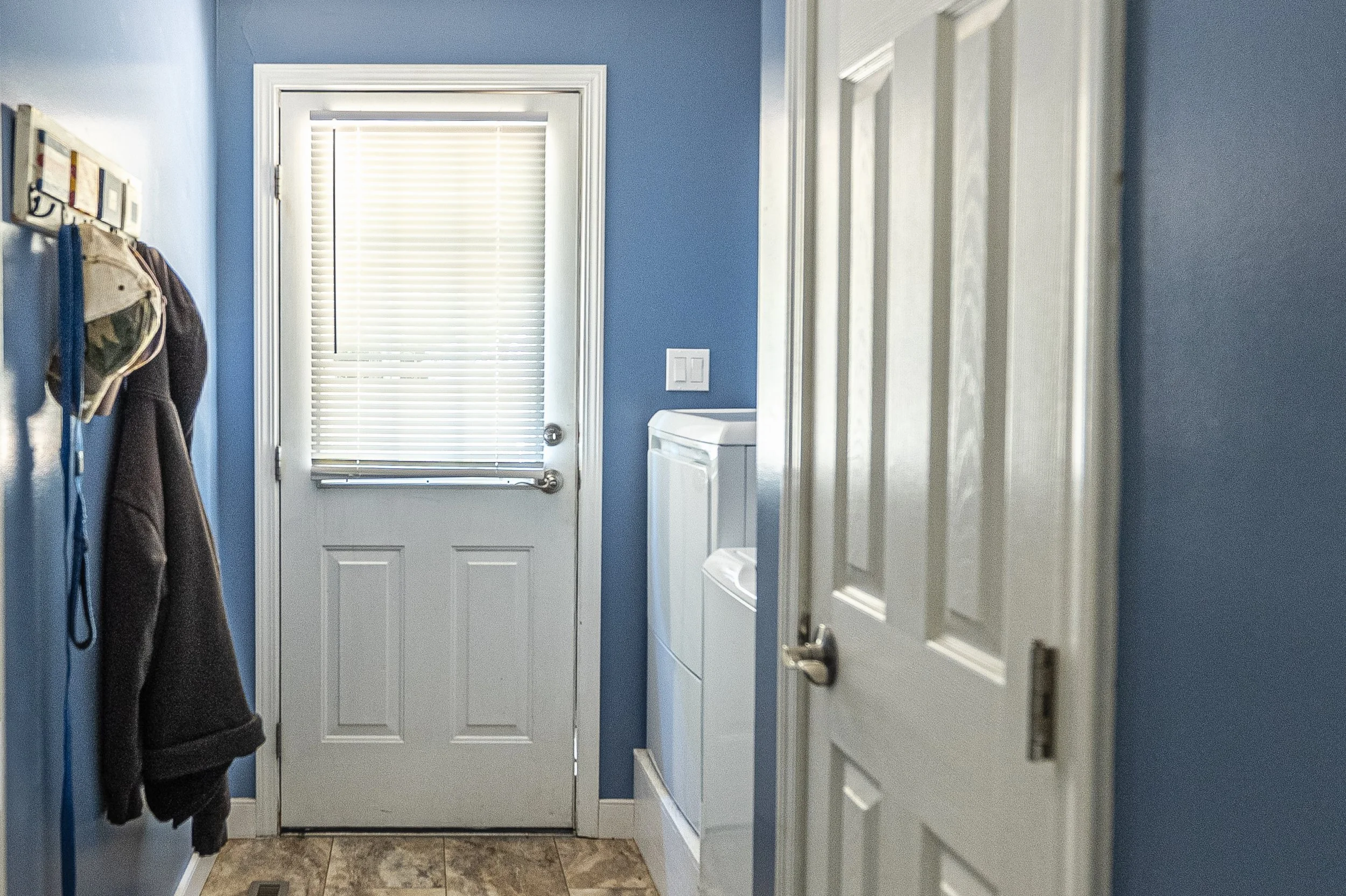
The laundry and mudroom occupy a practical but thoughtfully positioned spot between the living areas and the rear entry. Blue-painted walls and tile flooring signal the room’s workhorse intent, while a row of wall hooks near the back door — a proper coat rack for coming in from the yard, the workshop, or the water — grounds the space in the reality of country living. A full-size washer and dryer fit without crowding, and the glazed back door draws natural light into what might otherwise be a purely utilitarian corridor. It is the kind of room that makes a house livable rather than merely beautiful.
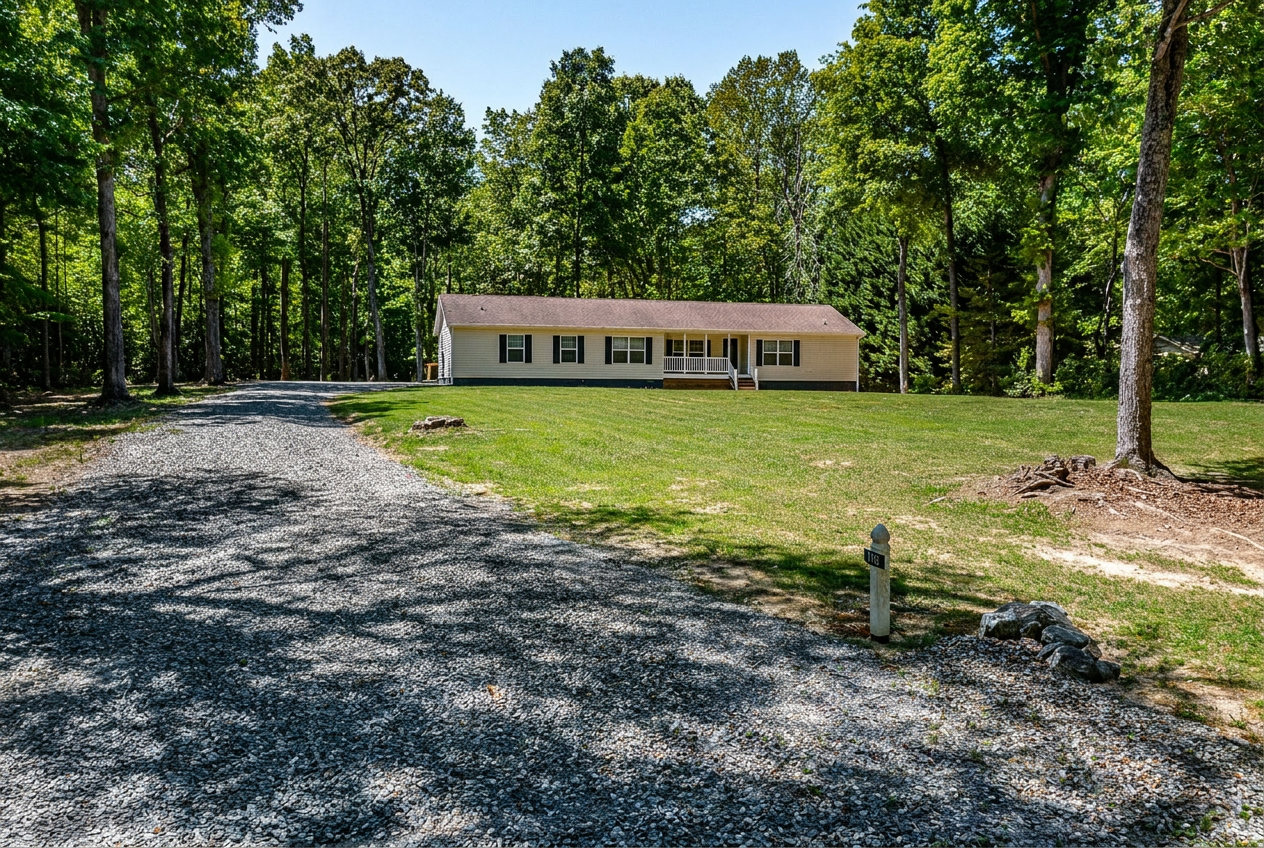
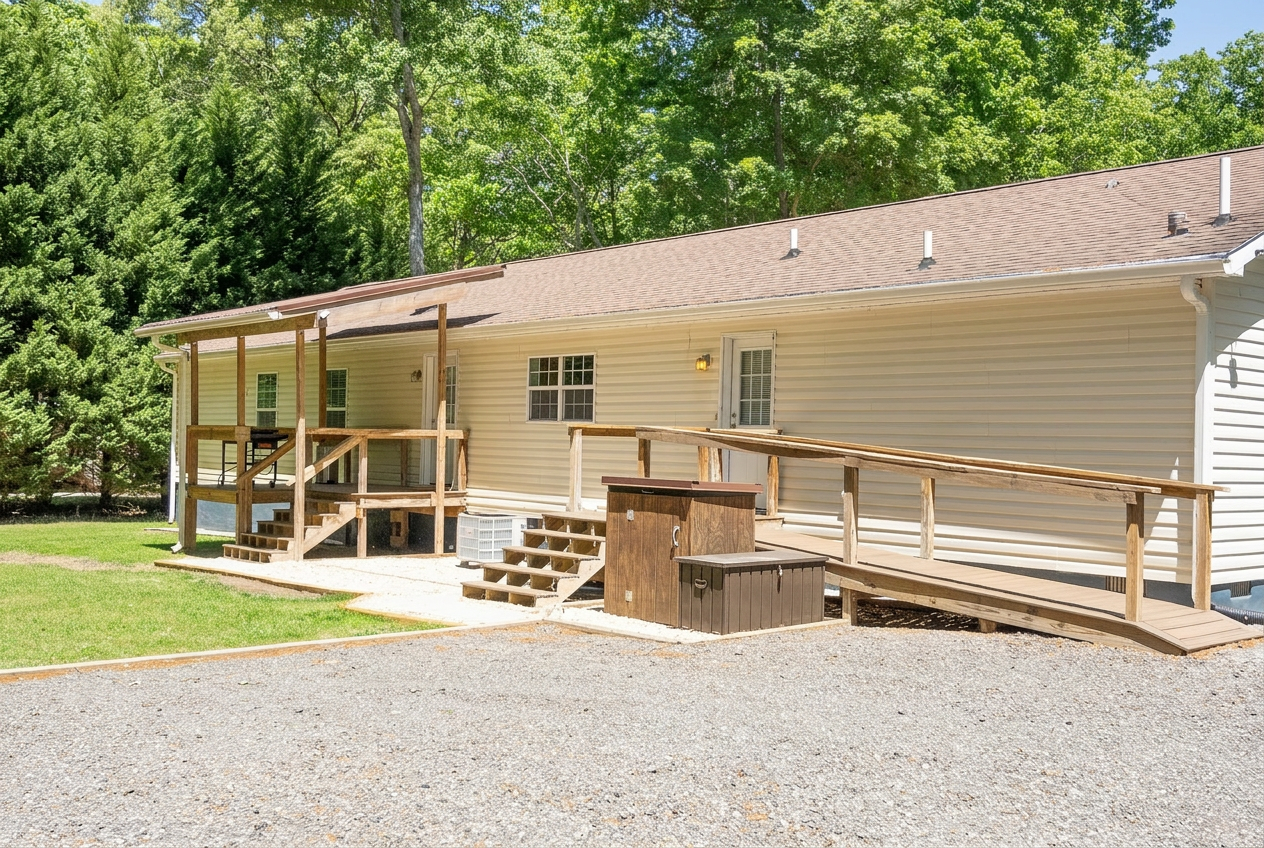
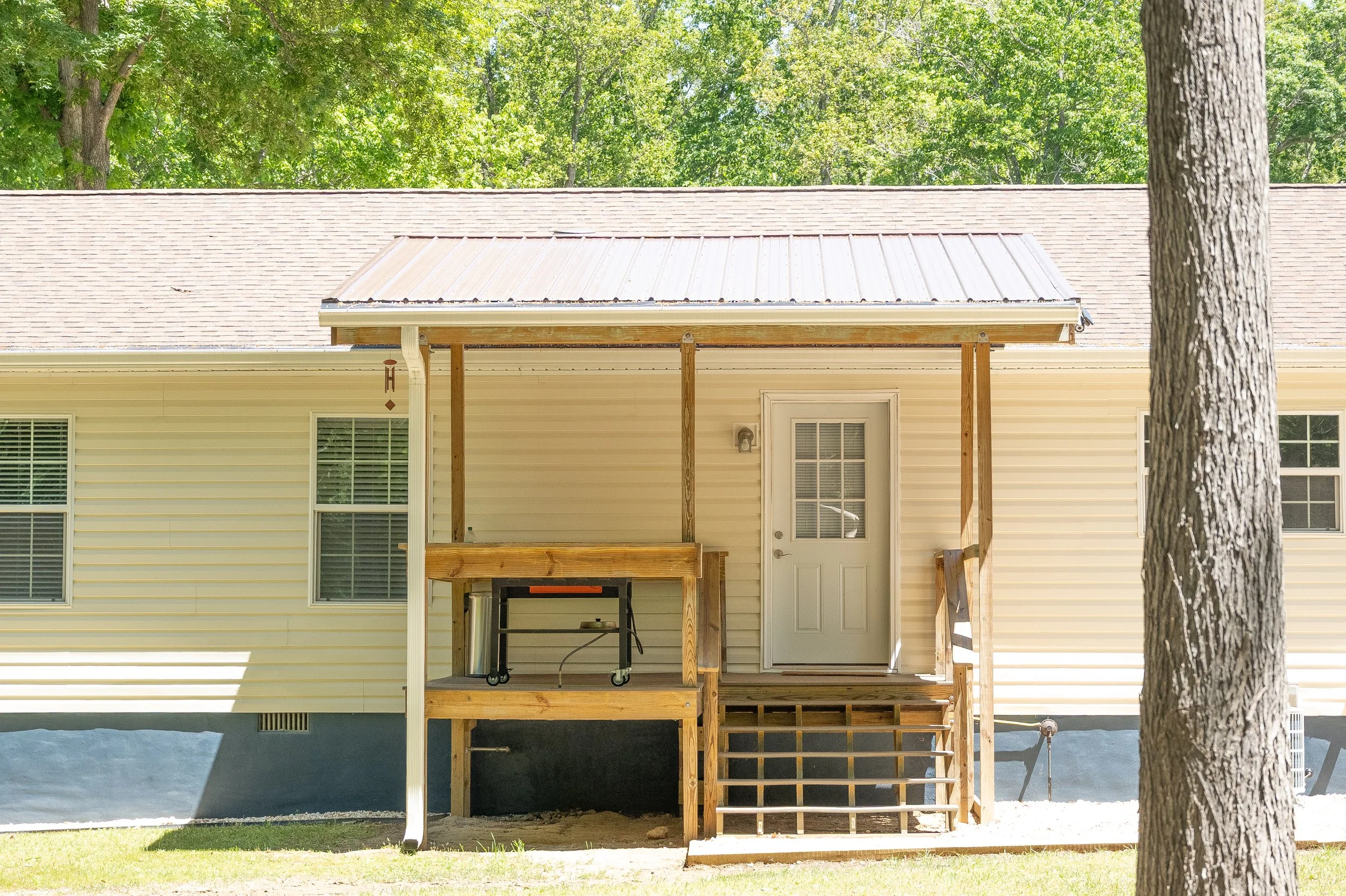
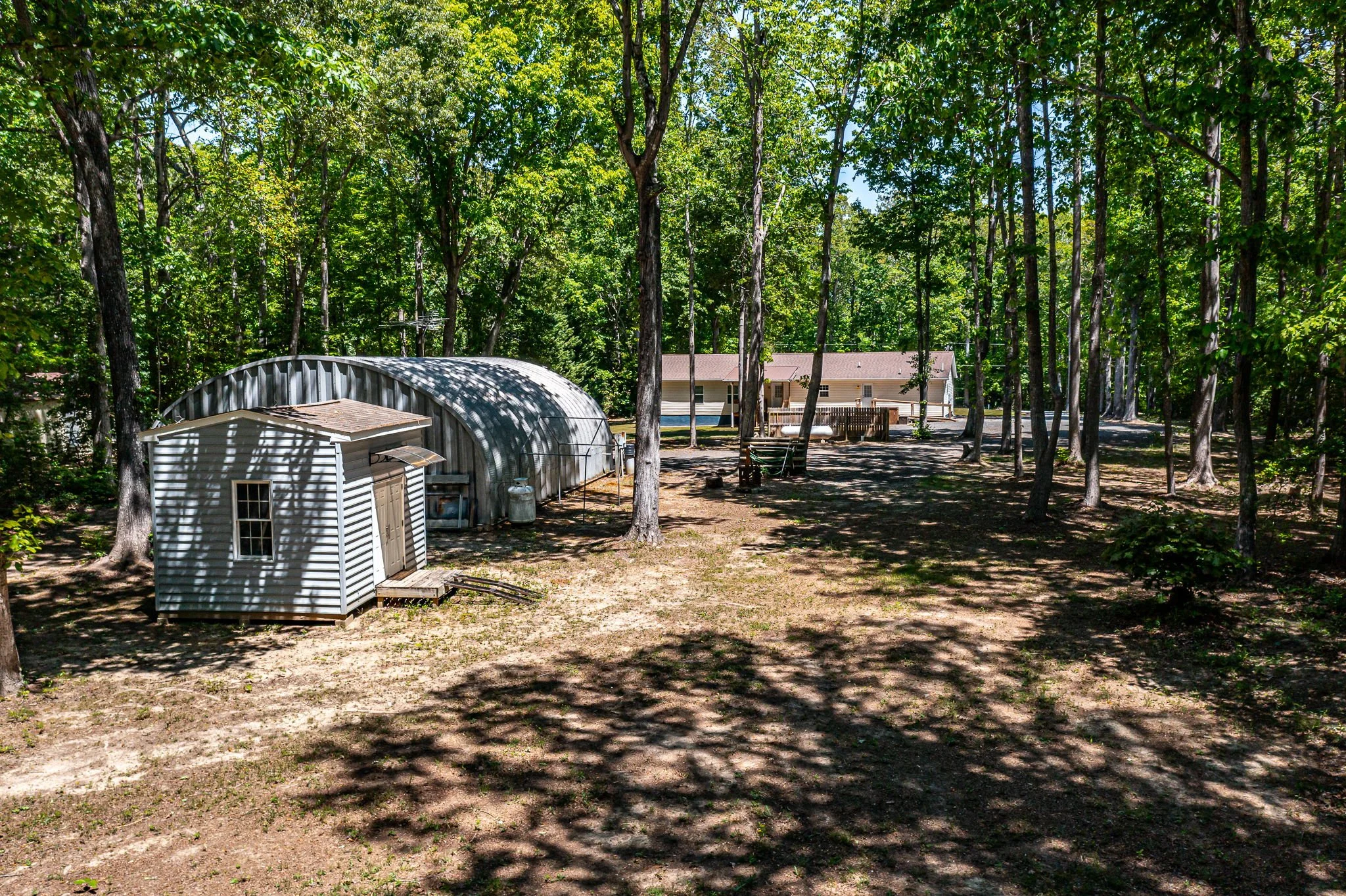
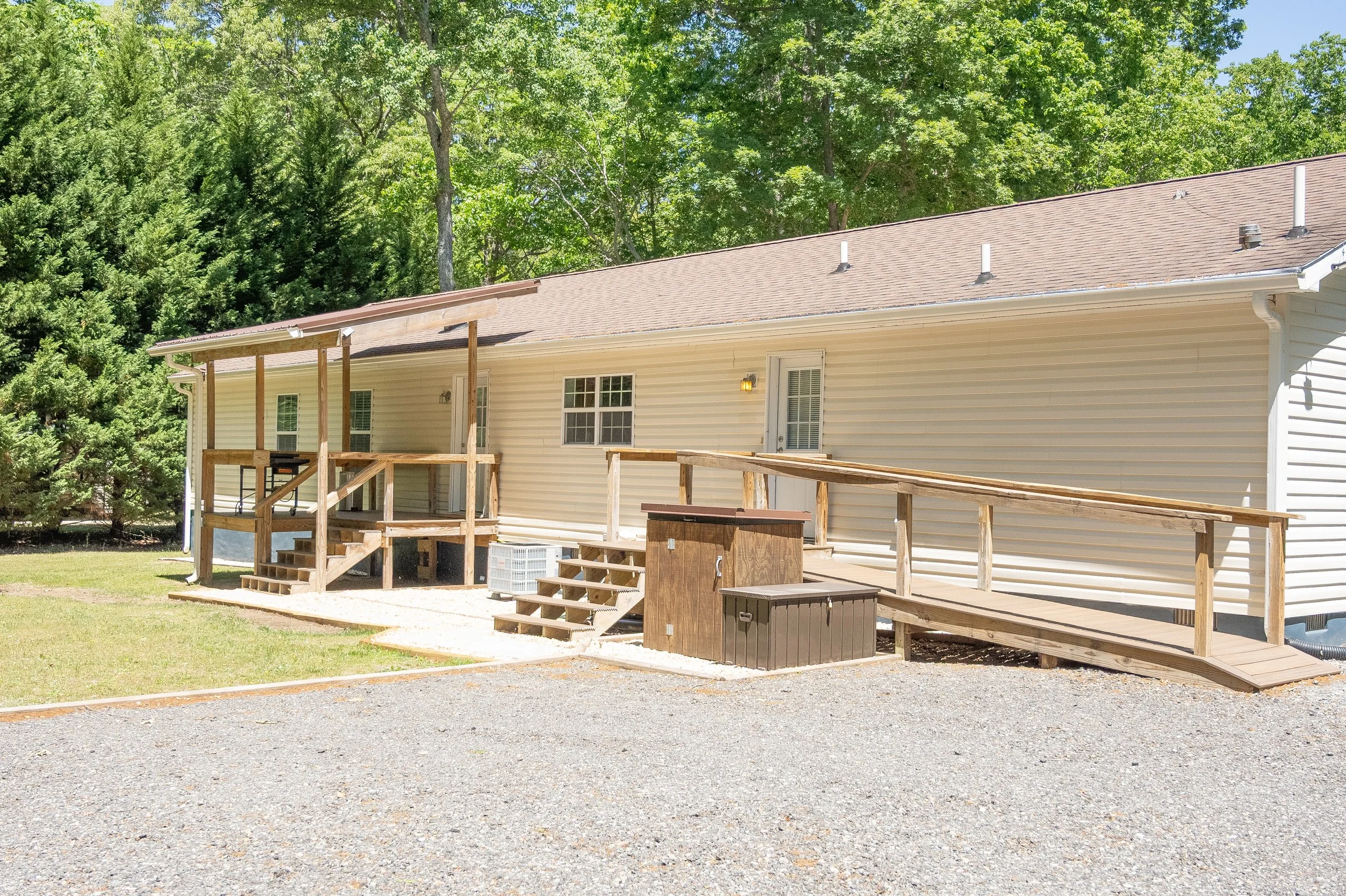
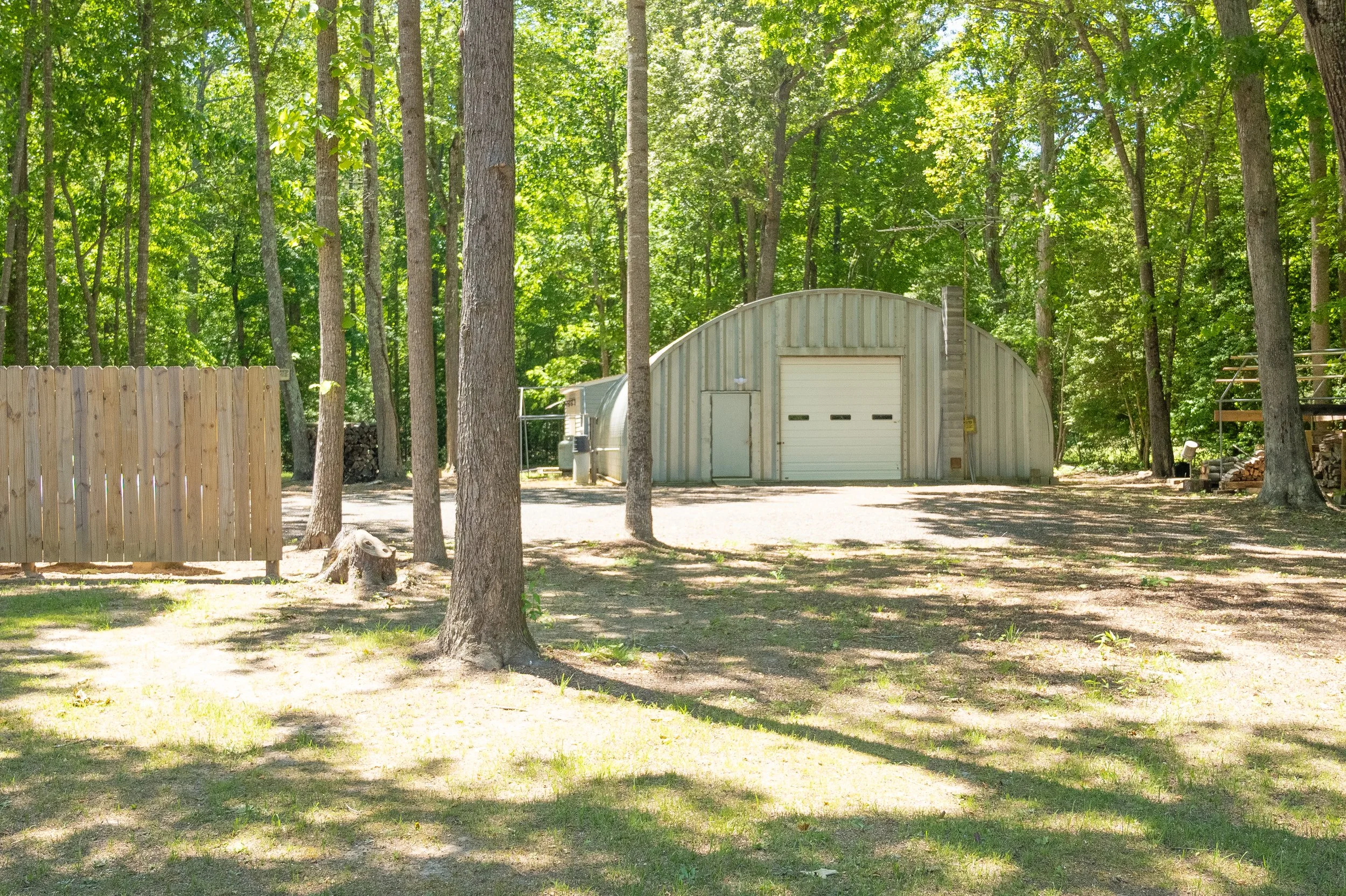
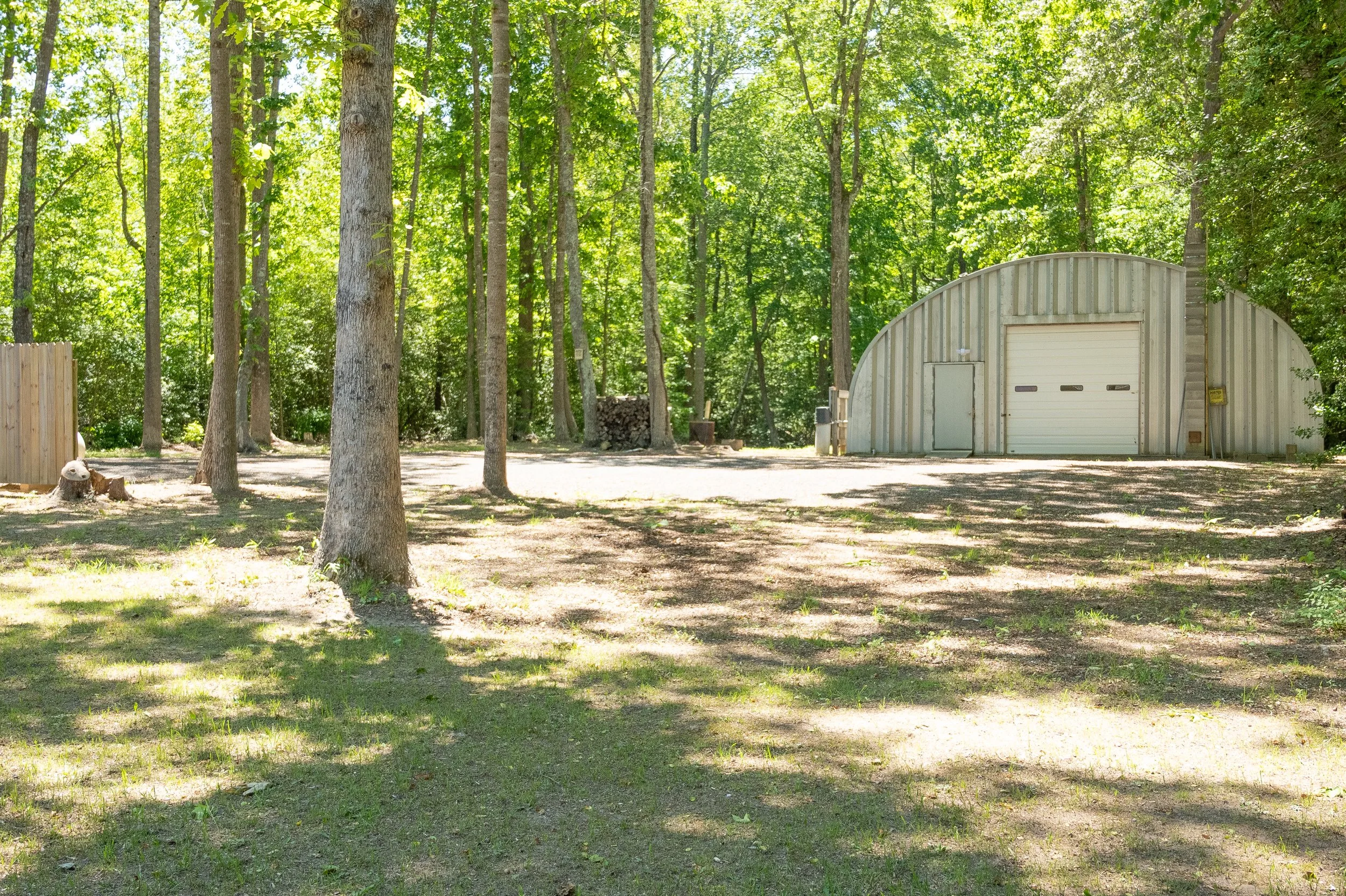
The approach to 115 Edge Hill Lane announces itself quietly — a long gravel motor court that crunches underfoot and slows the pace, lined by mature hardwoods whose canopy filters the Virginia light into something dappled and unhurried. This is not a house that rushes to reveal itself. It earns its welcome.
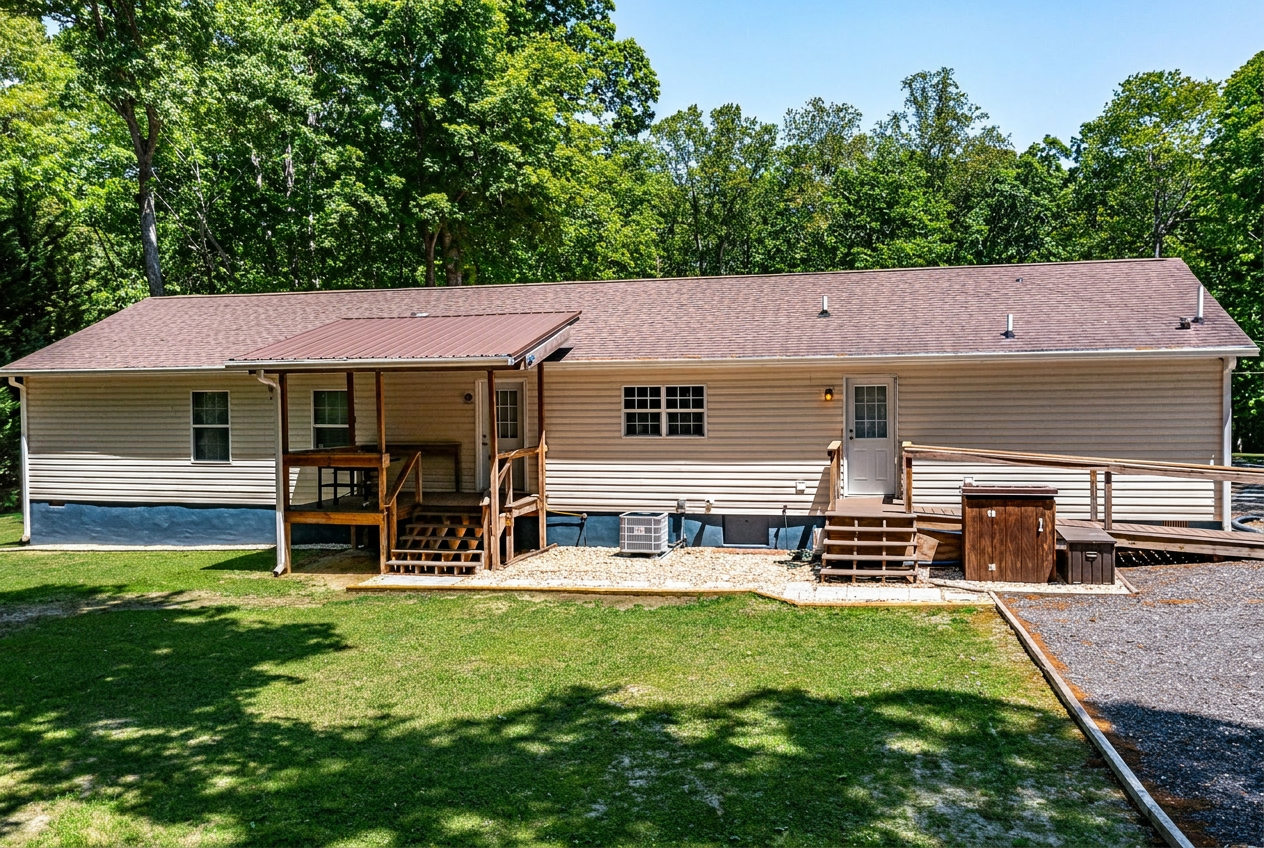
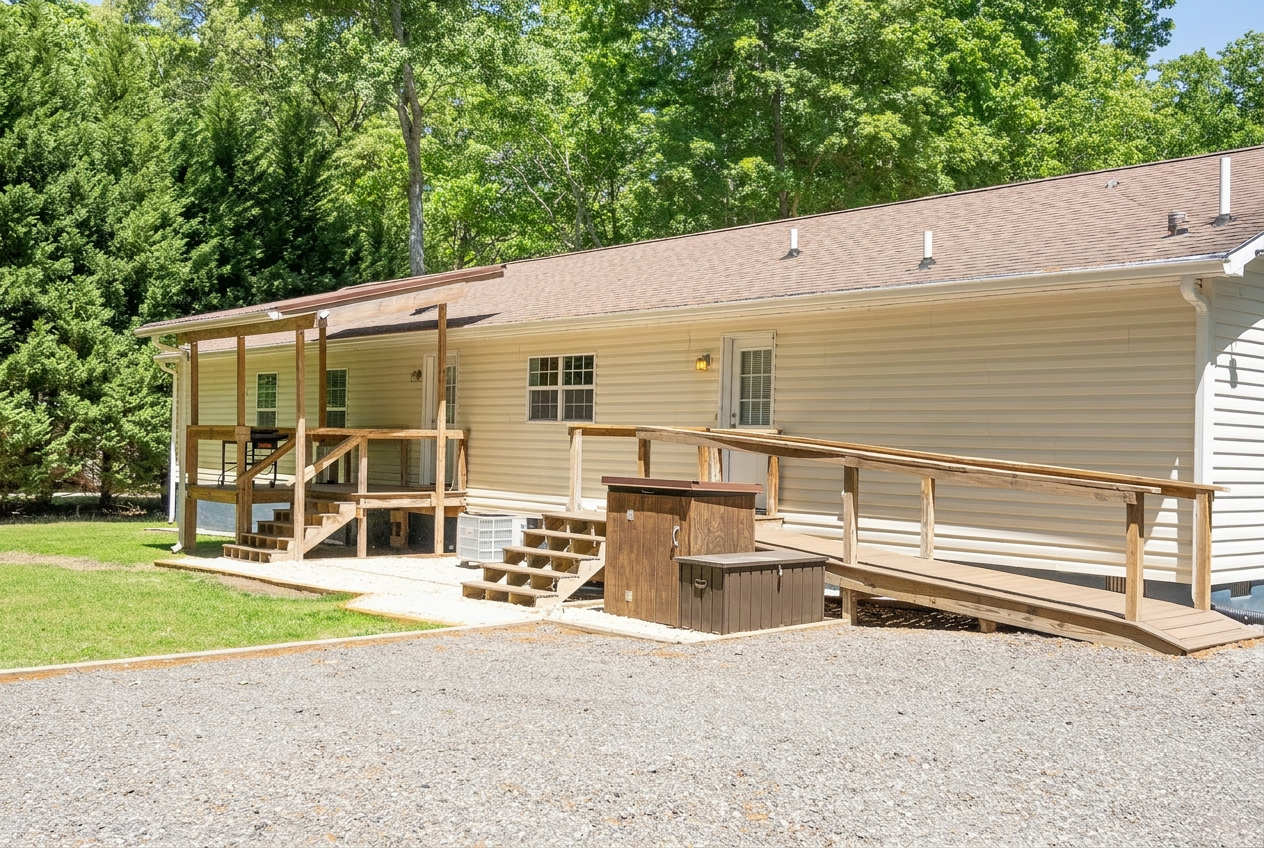
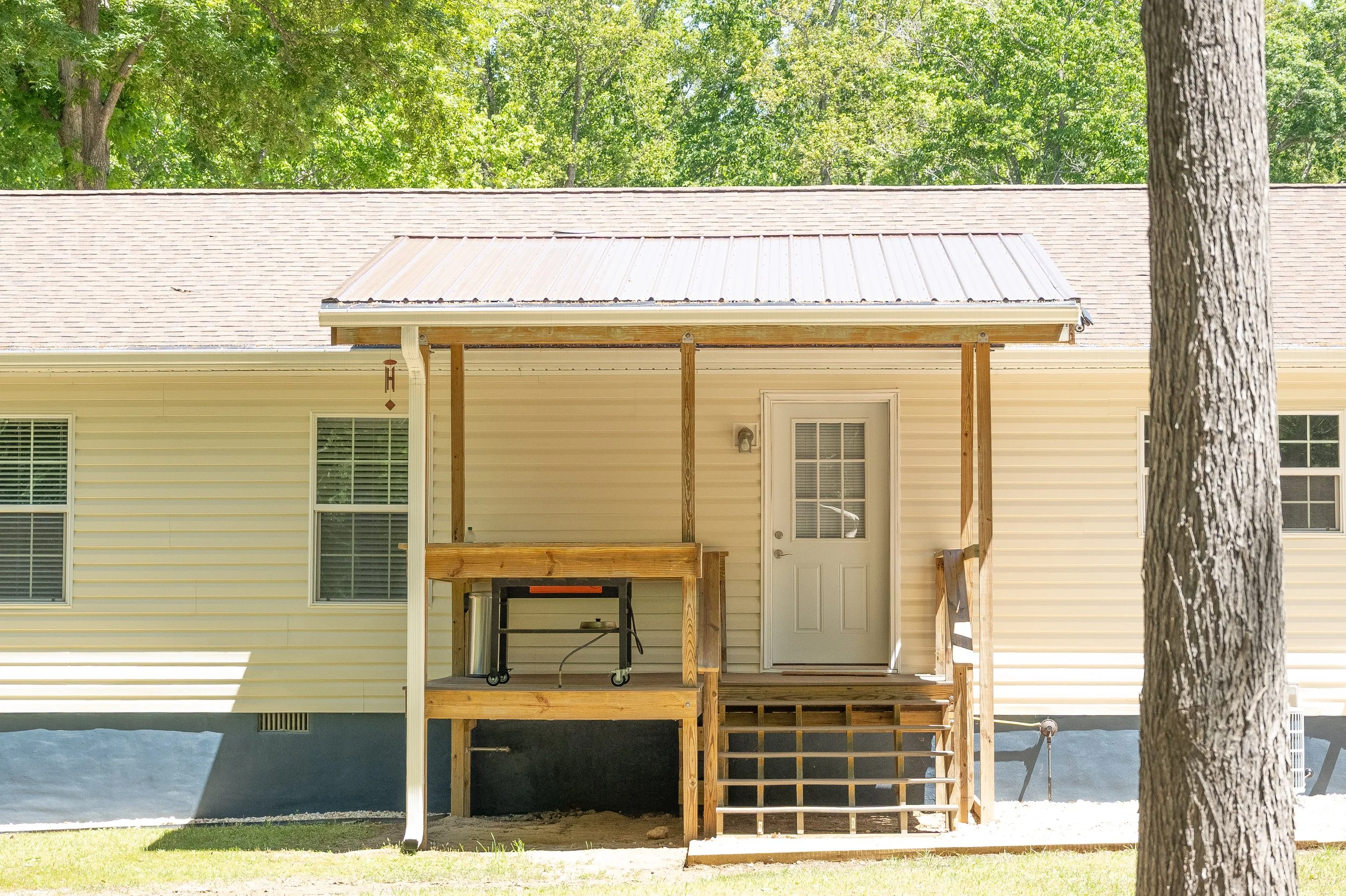
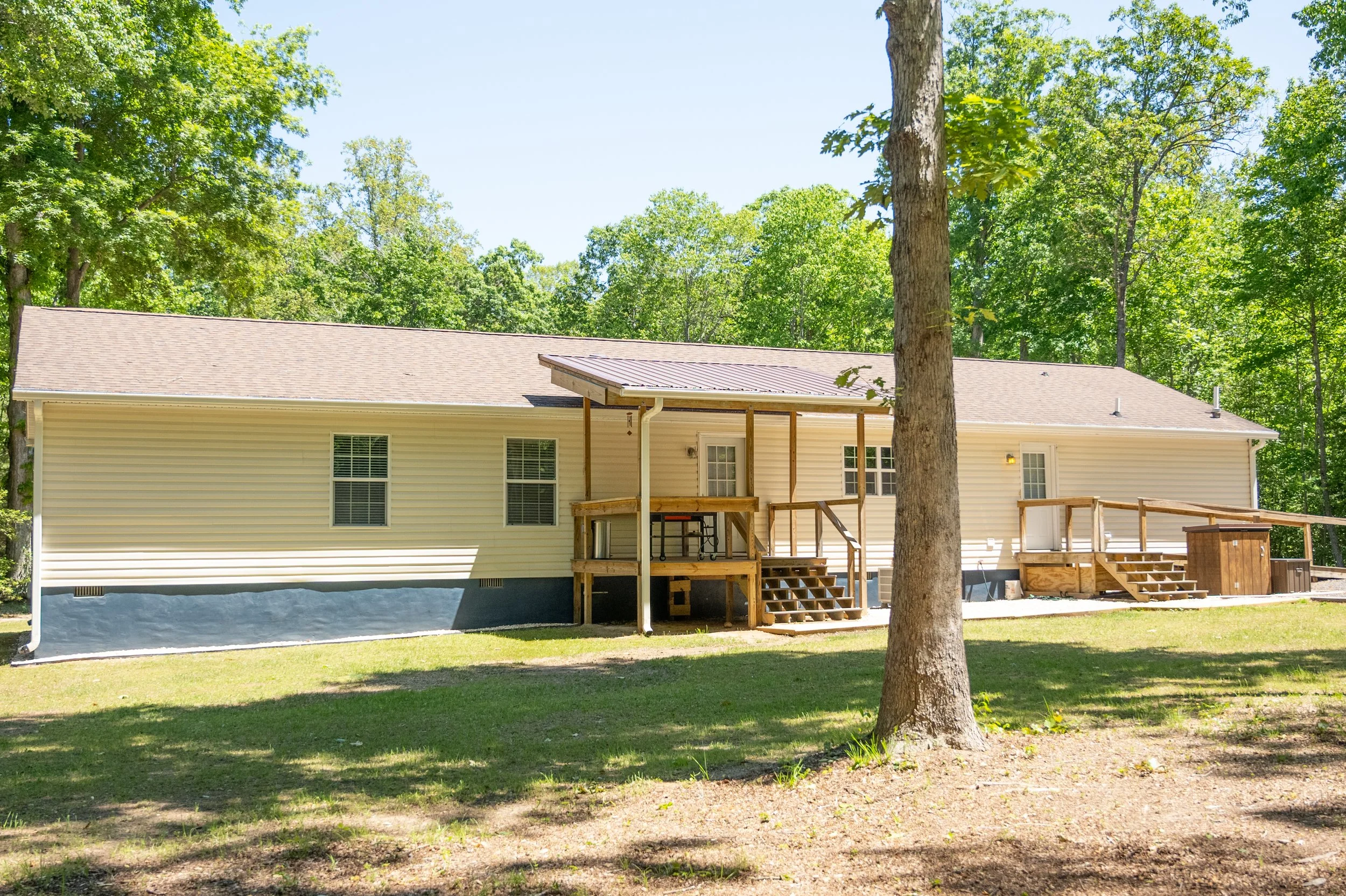
At the rear, a broad deck extends the living space outward in the easy, unpretentious way that country houses do best. It speaks to long summer evenings, the smell of something on the grill, and the kind of unhurried conversation that only happens when there are no neighbors close enough to hear. The yard opens into a generous sweep of lawn before yielding to the woods — two acres in total, no HOA, no interruptions.
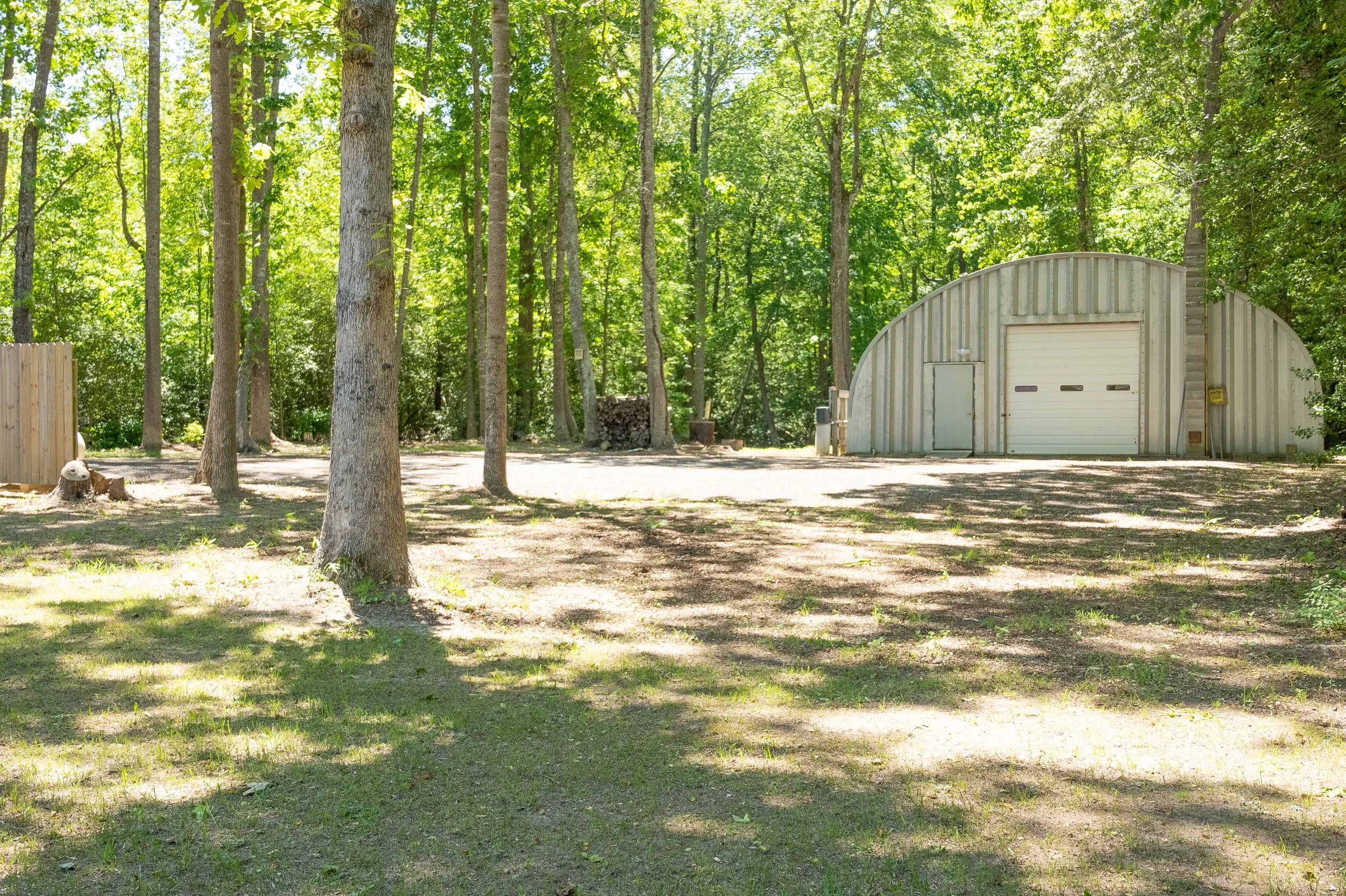
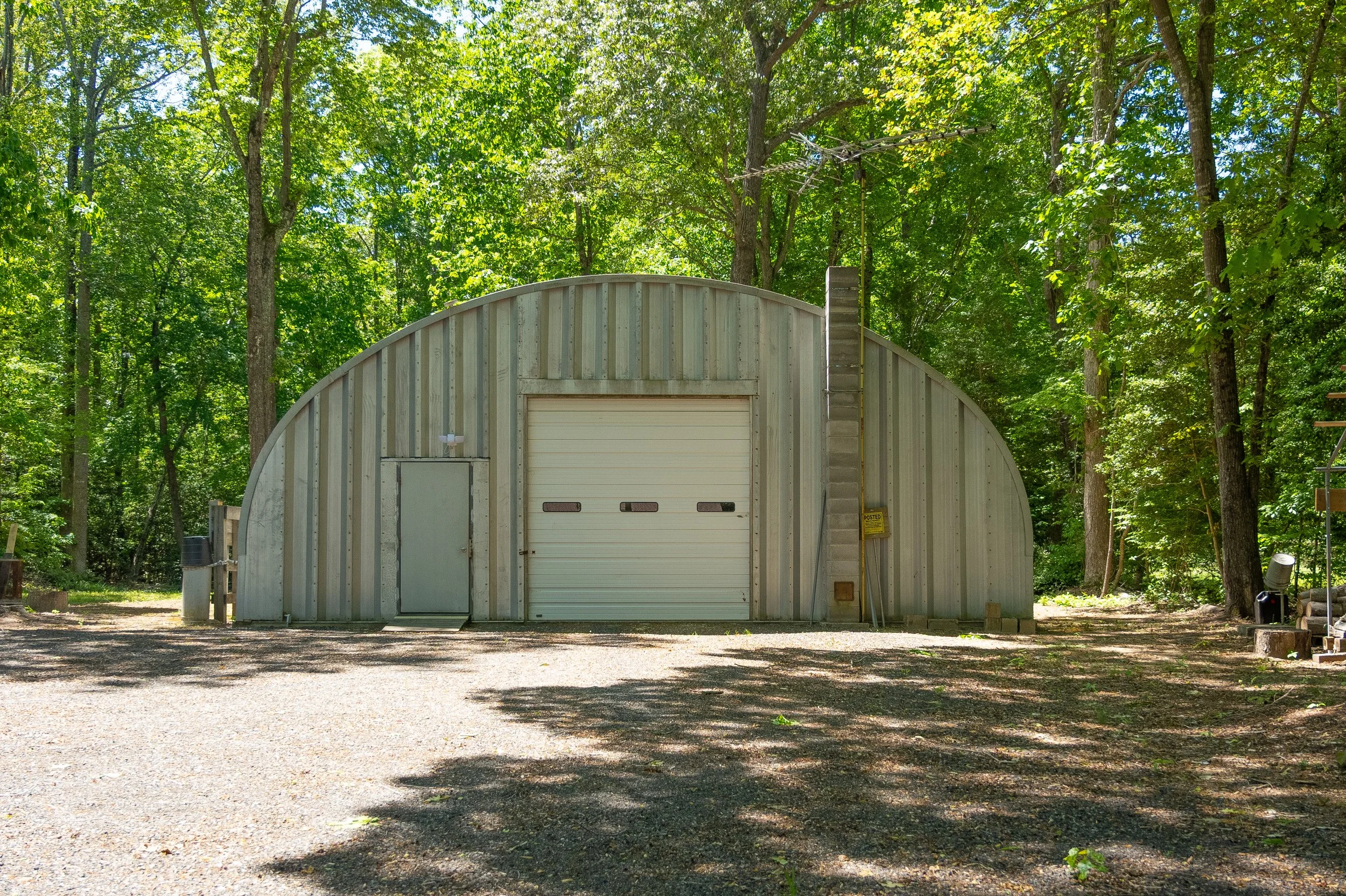
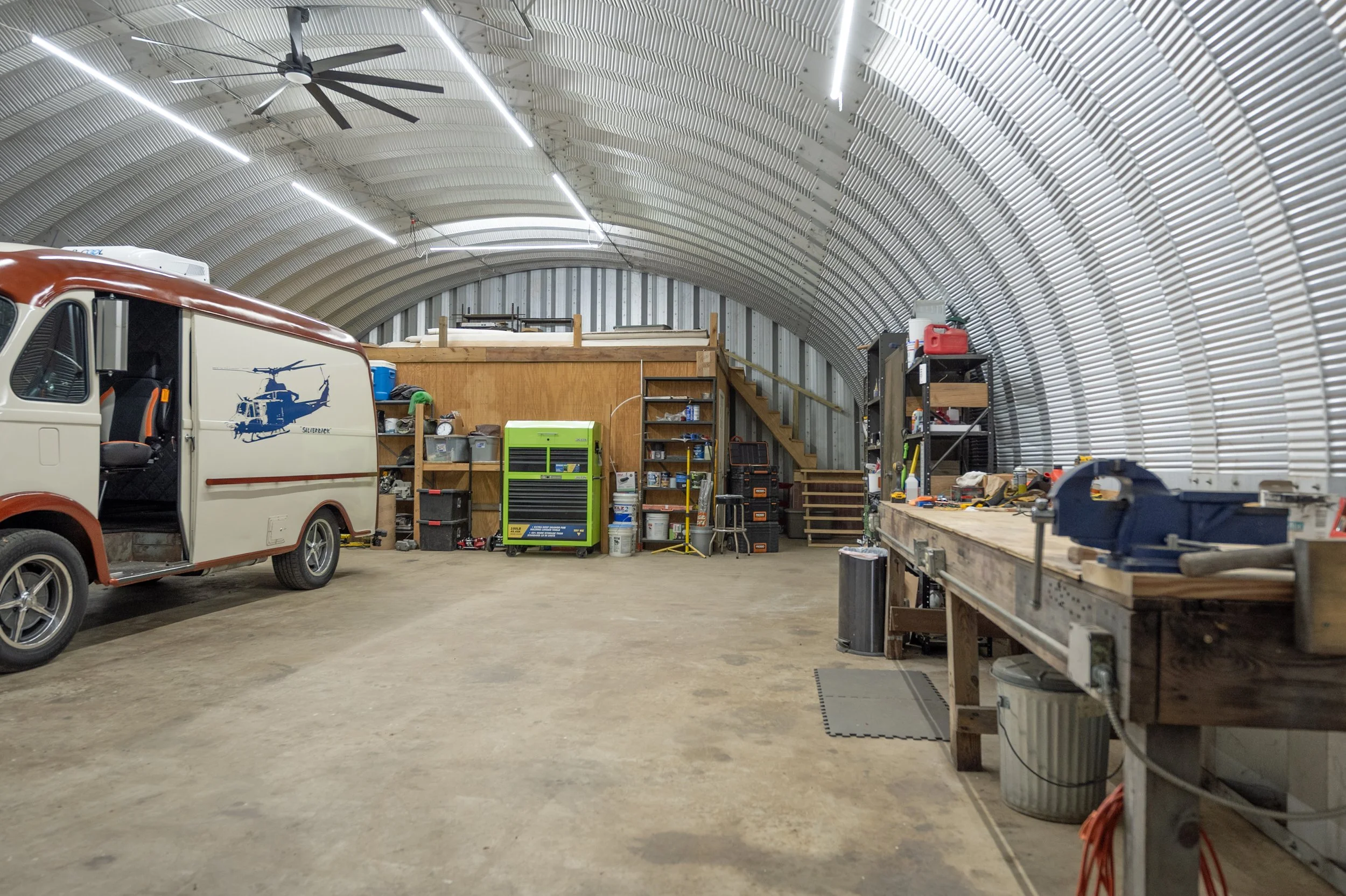
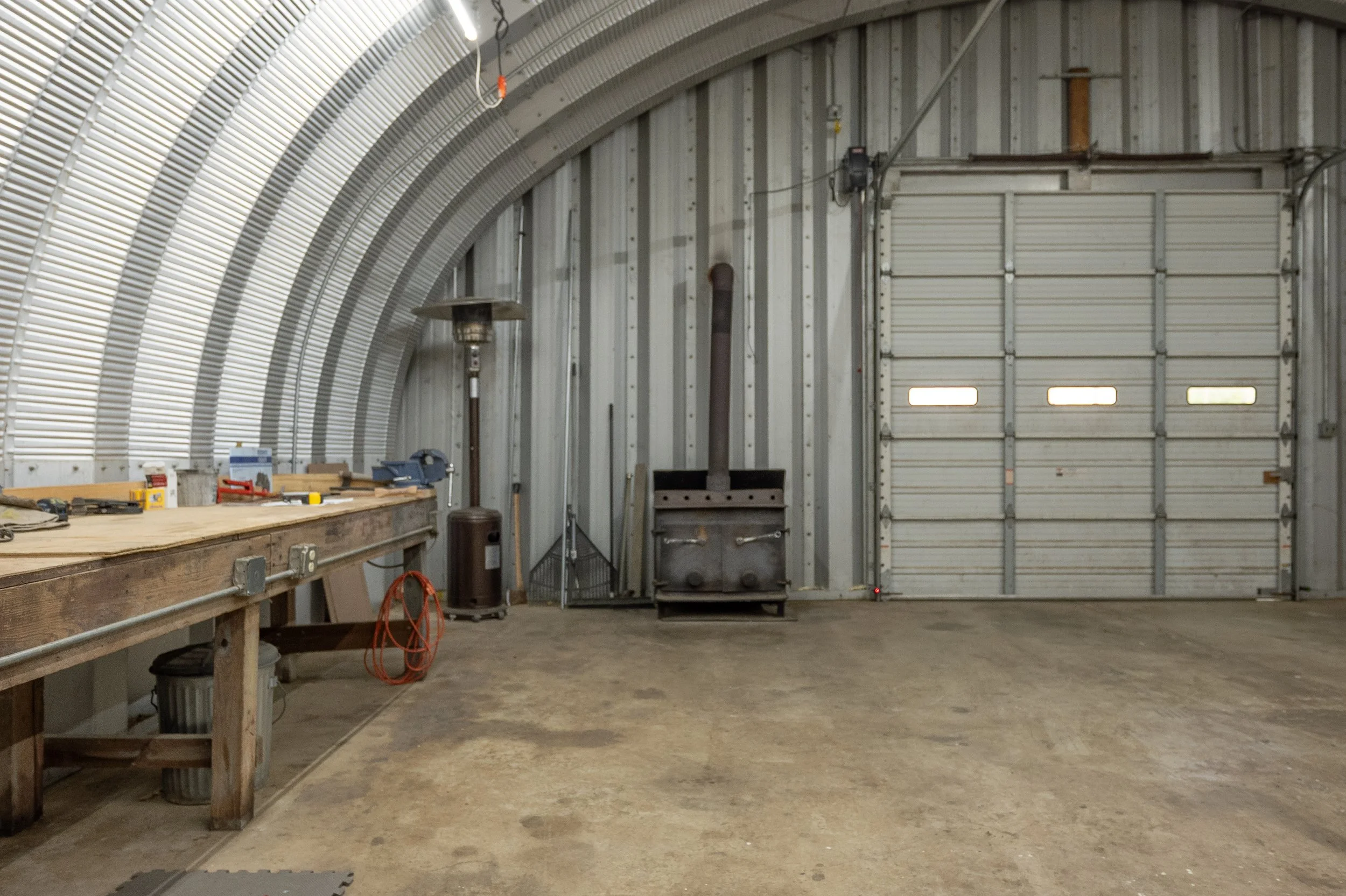
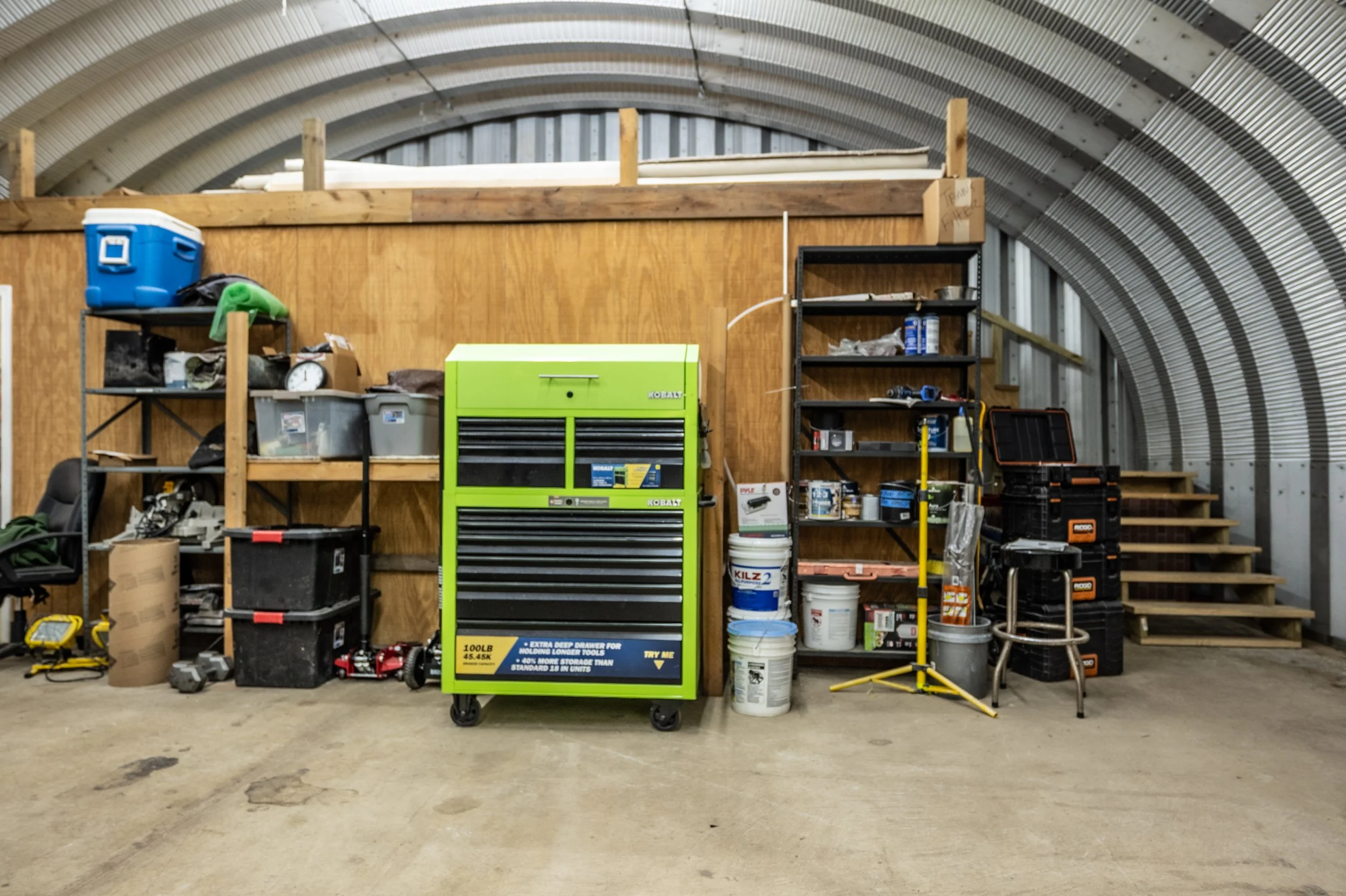
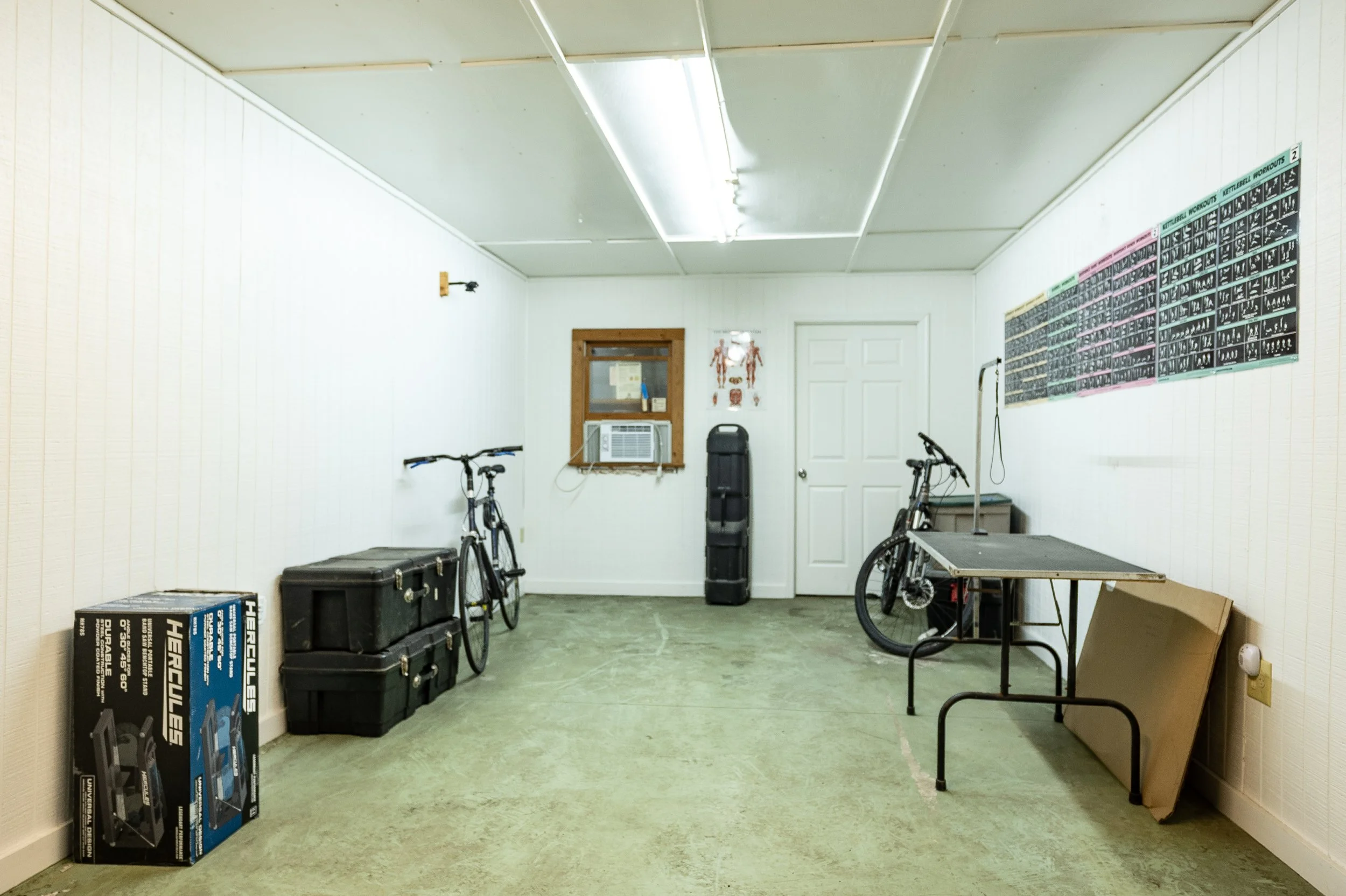
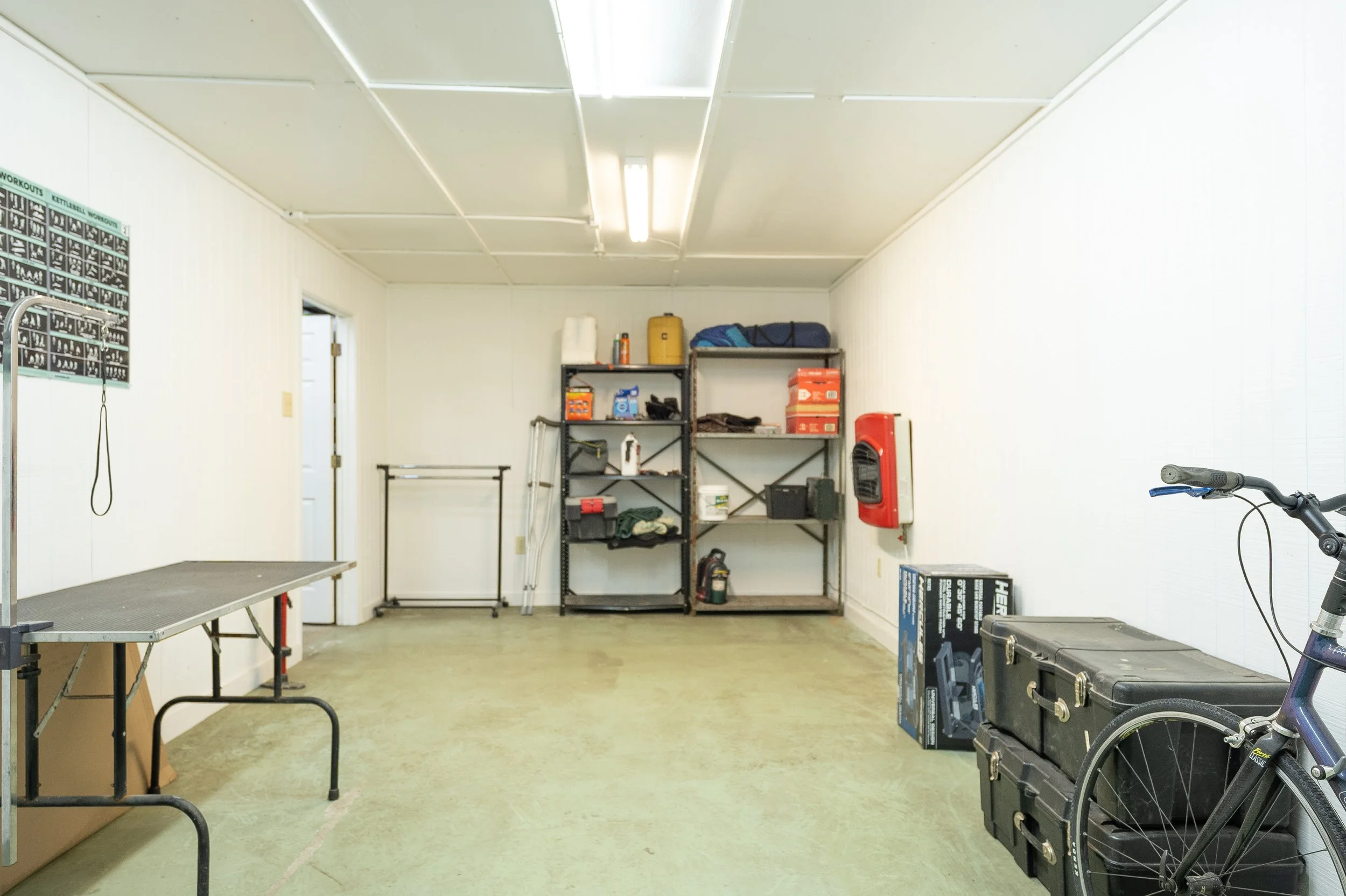
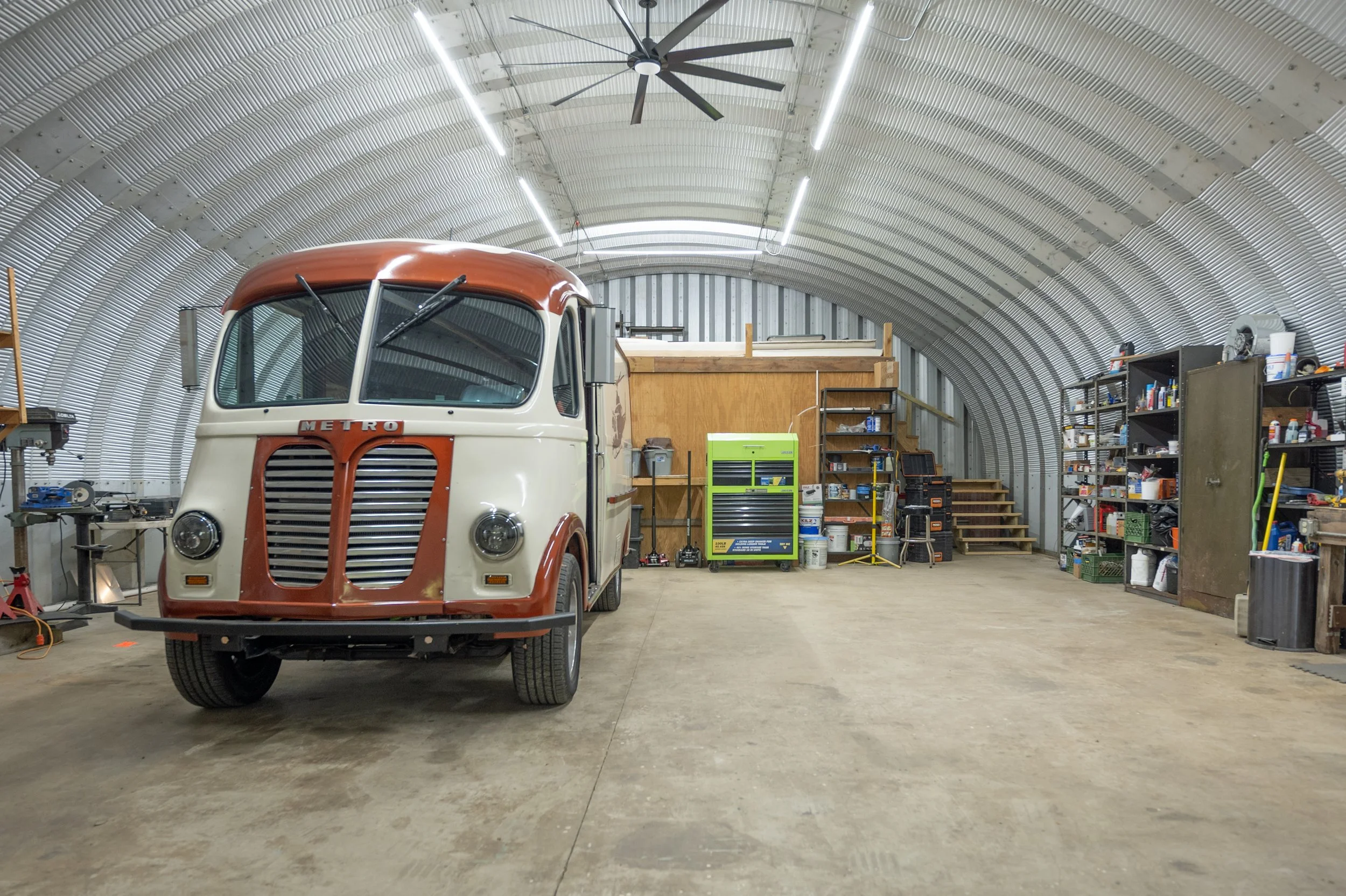
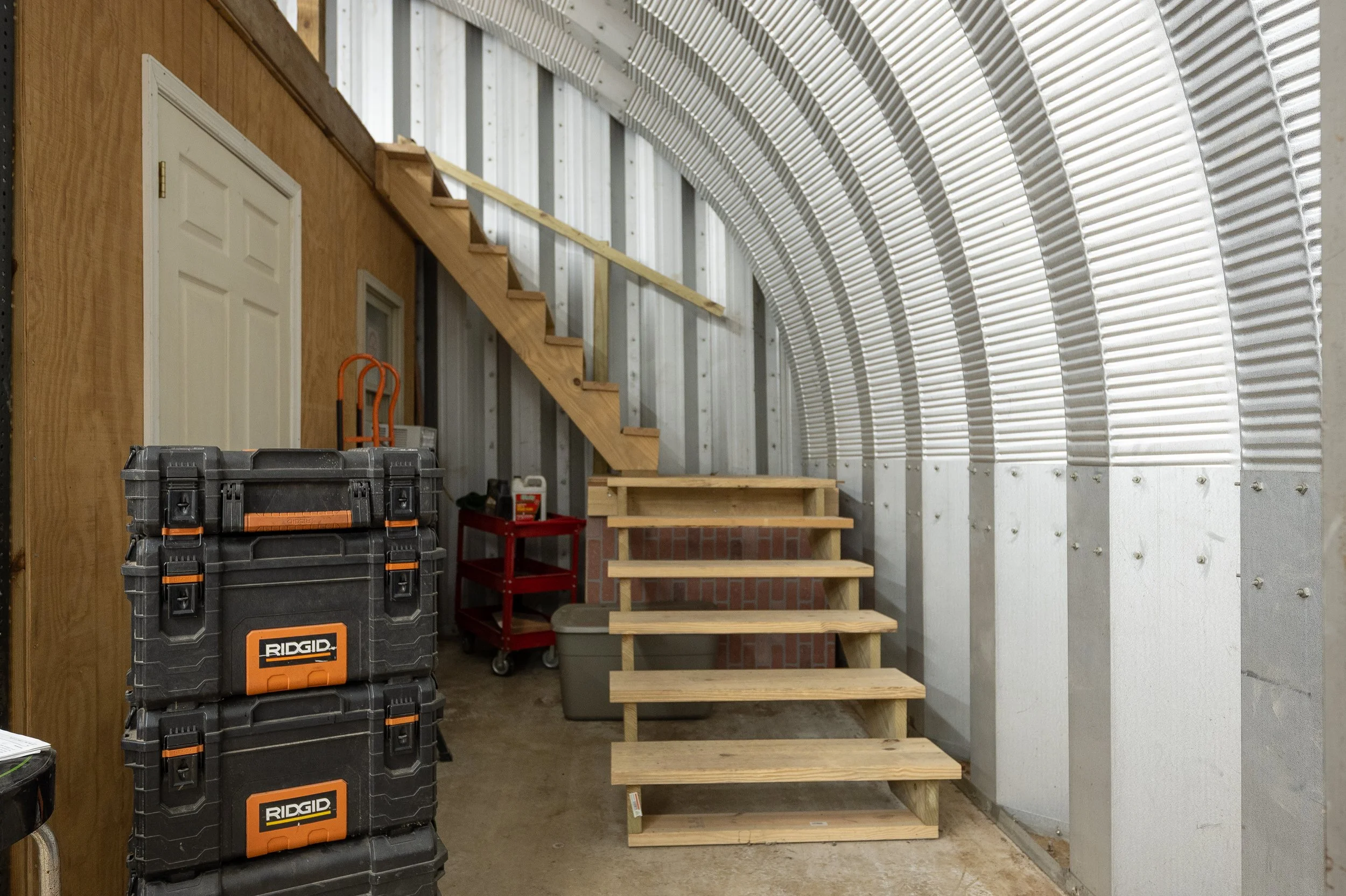
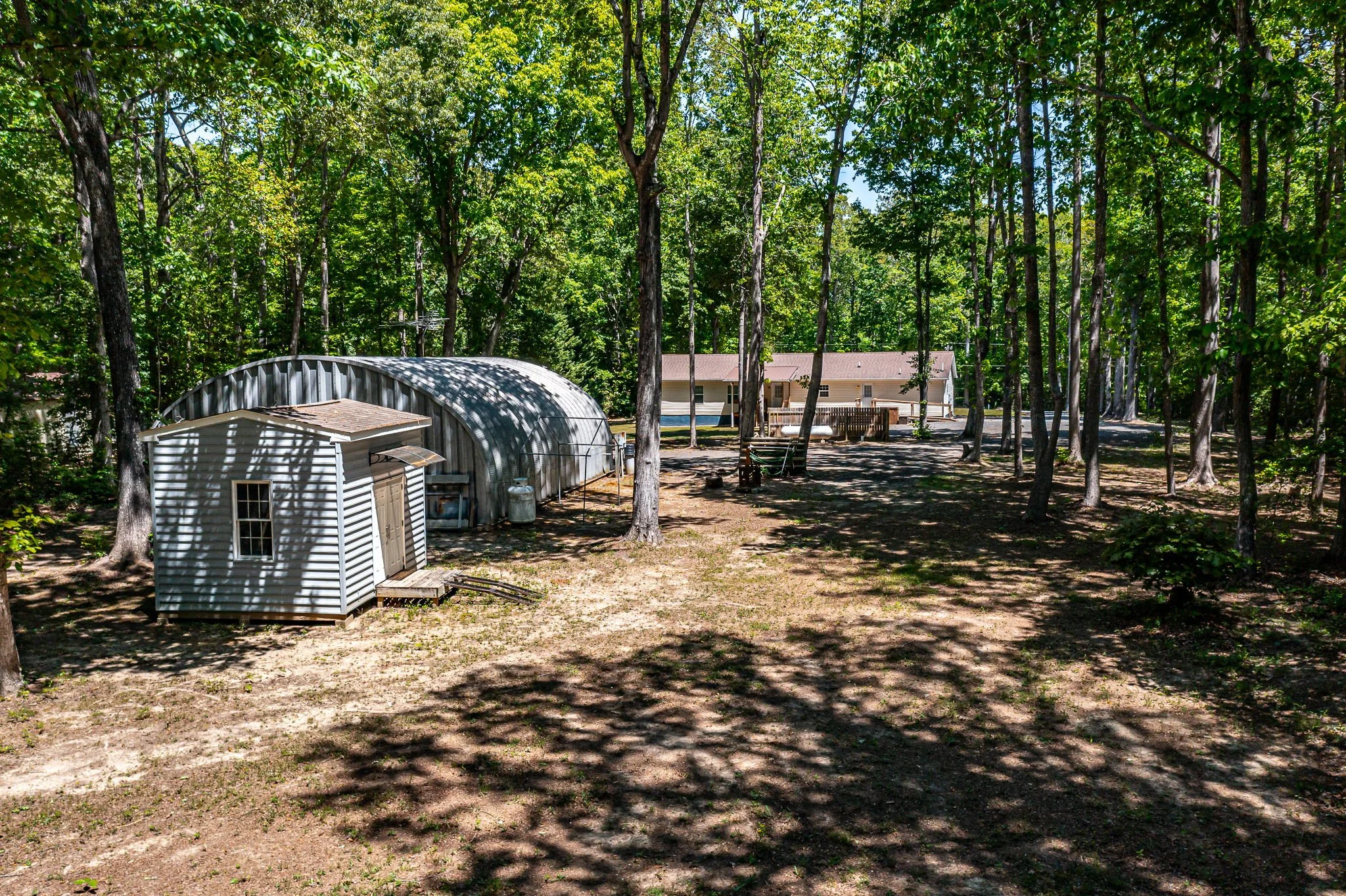
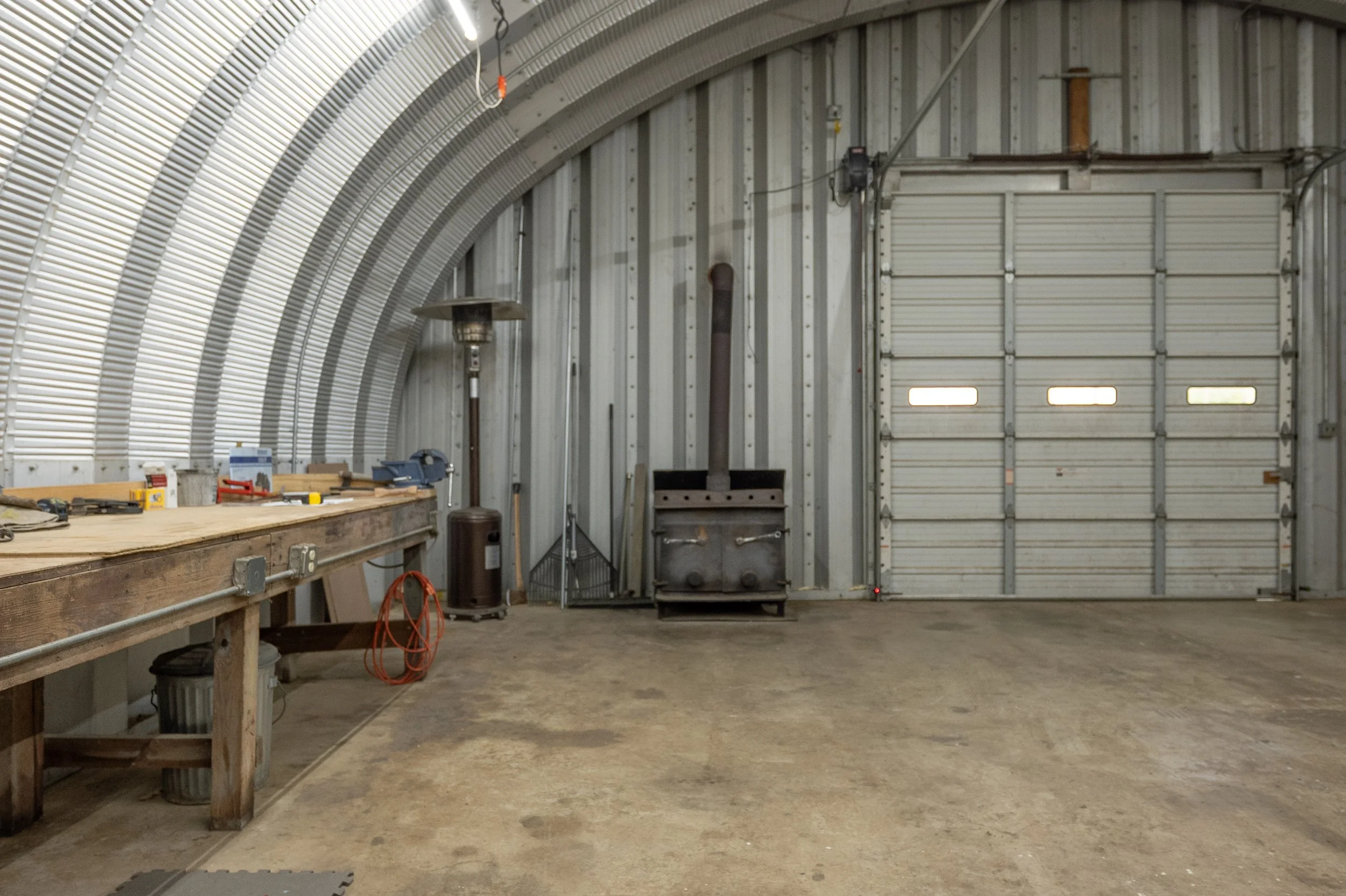
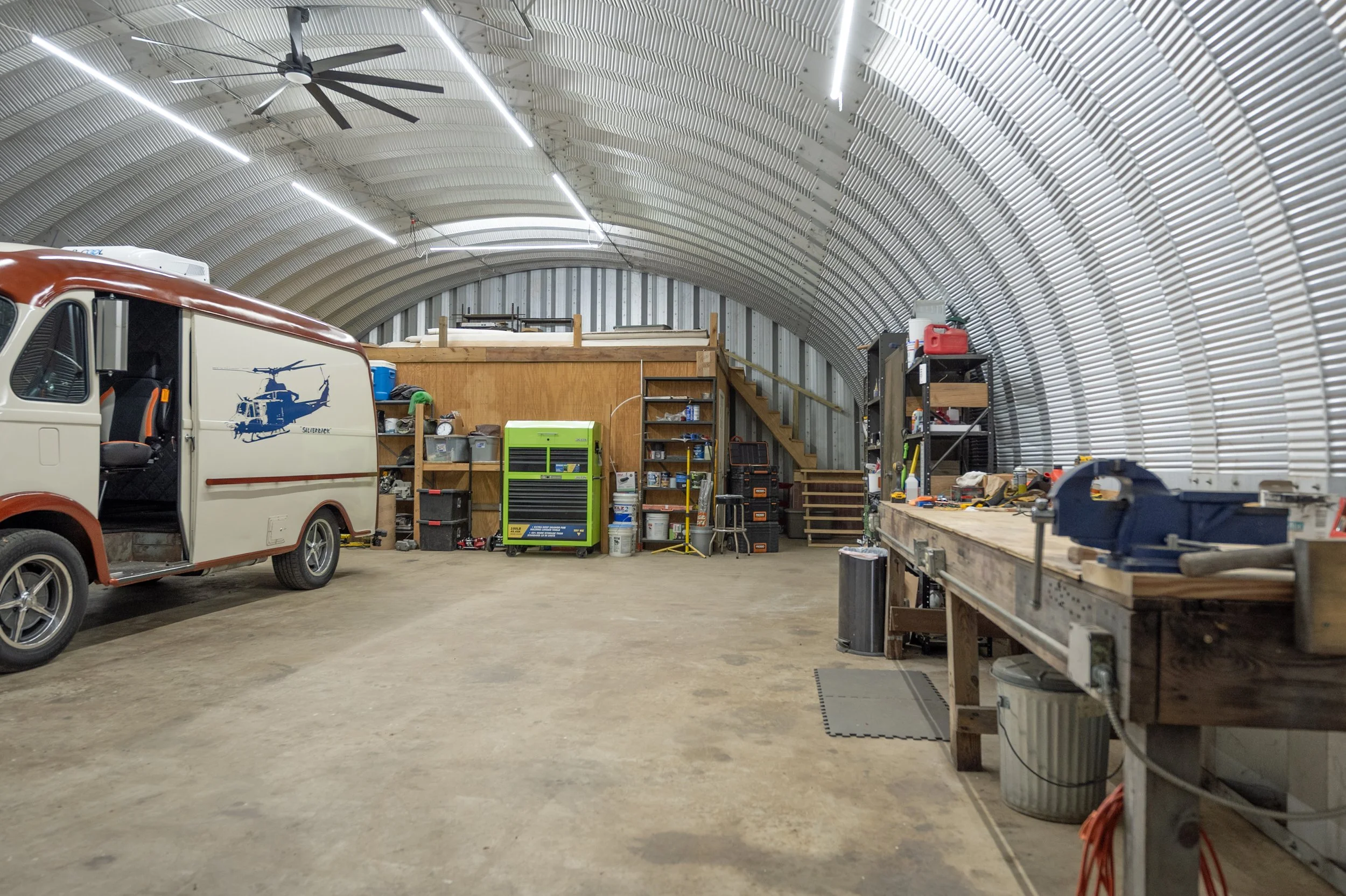
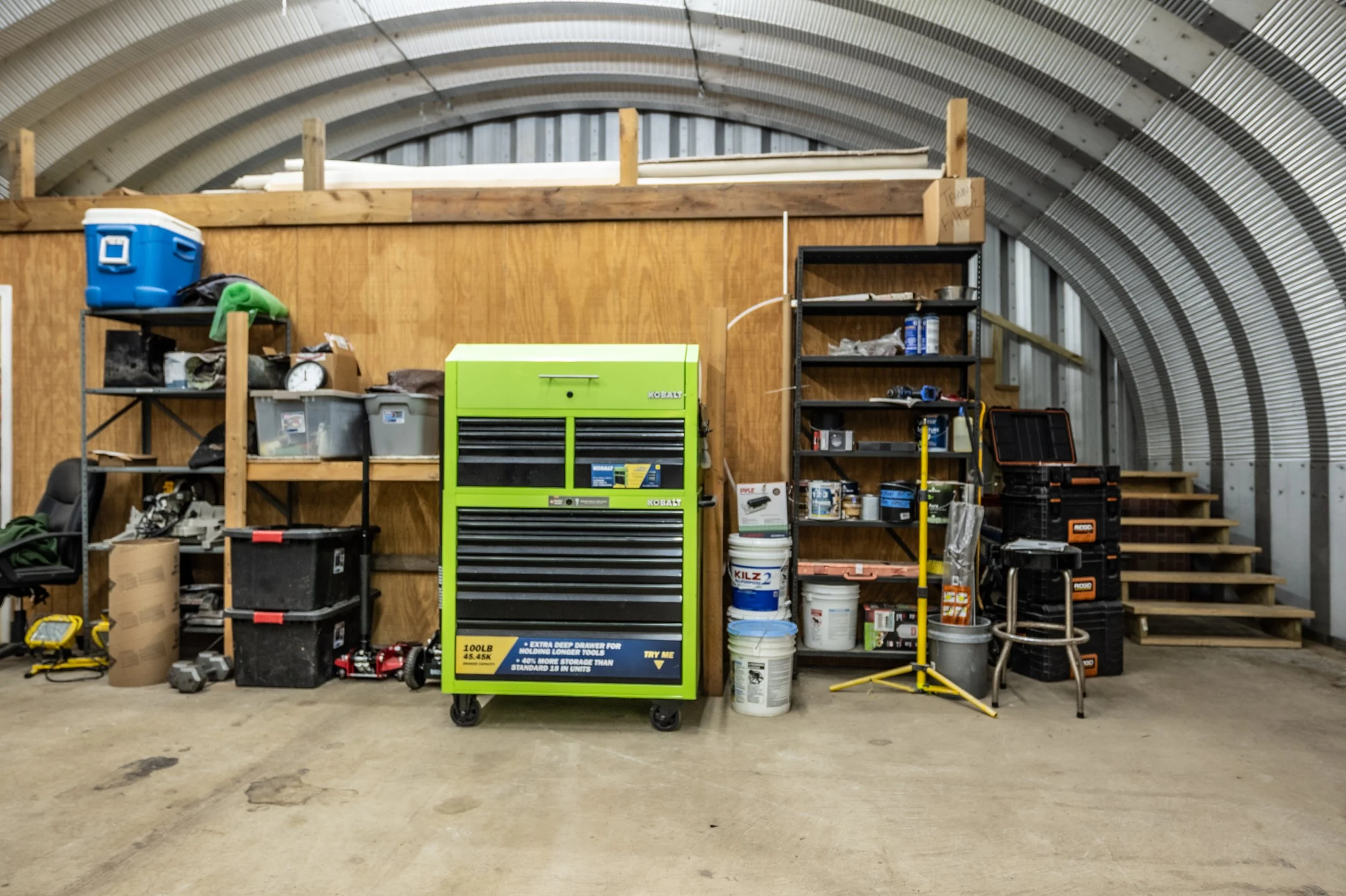
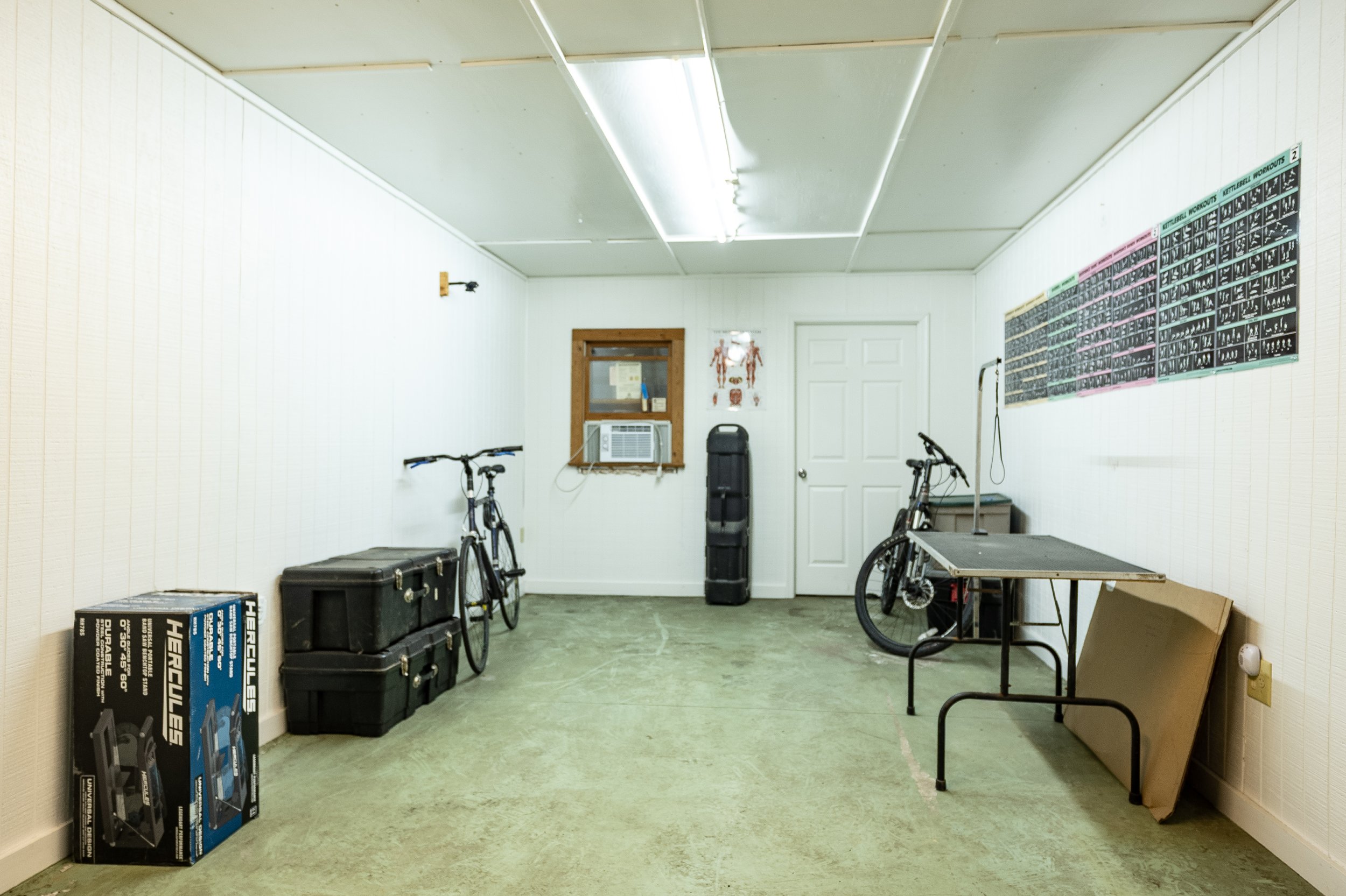
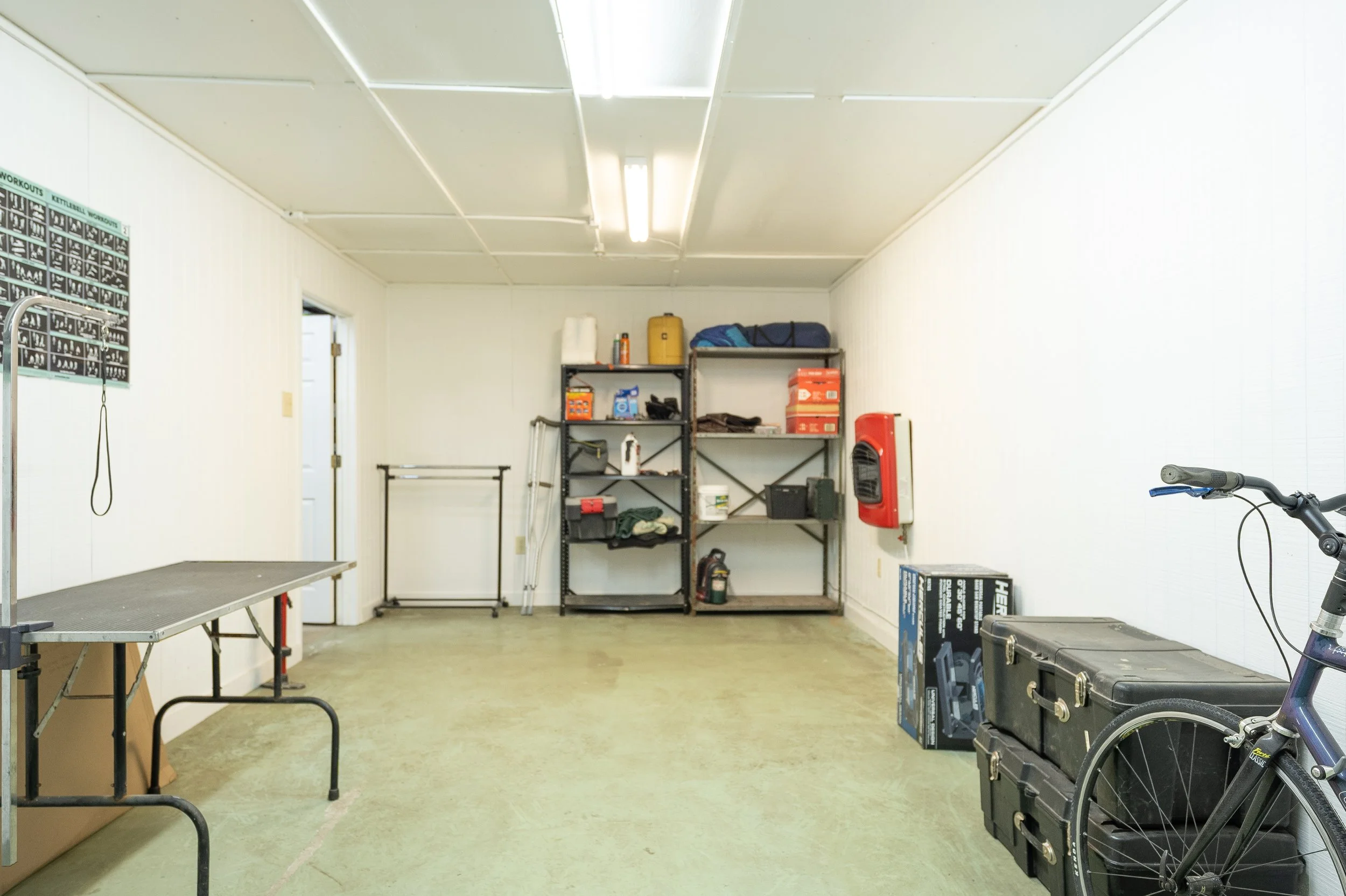
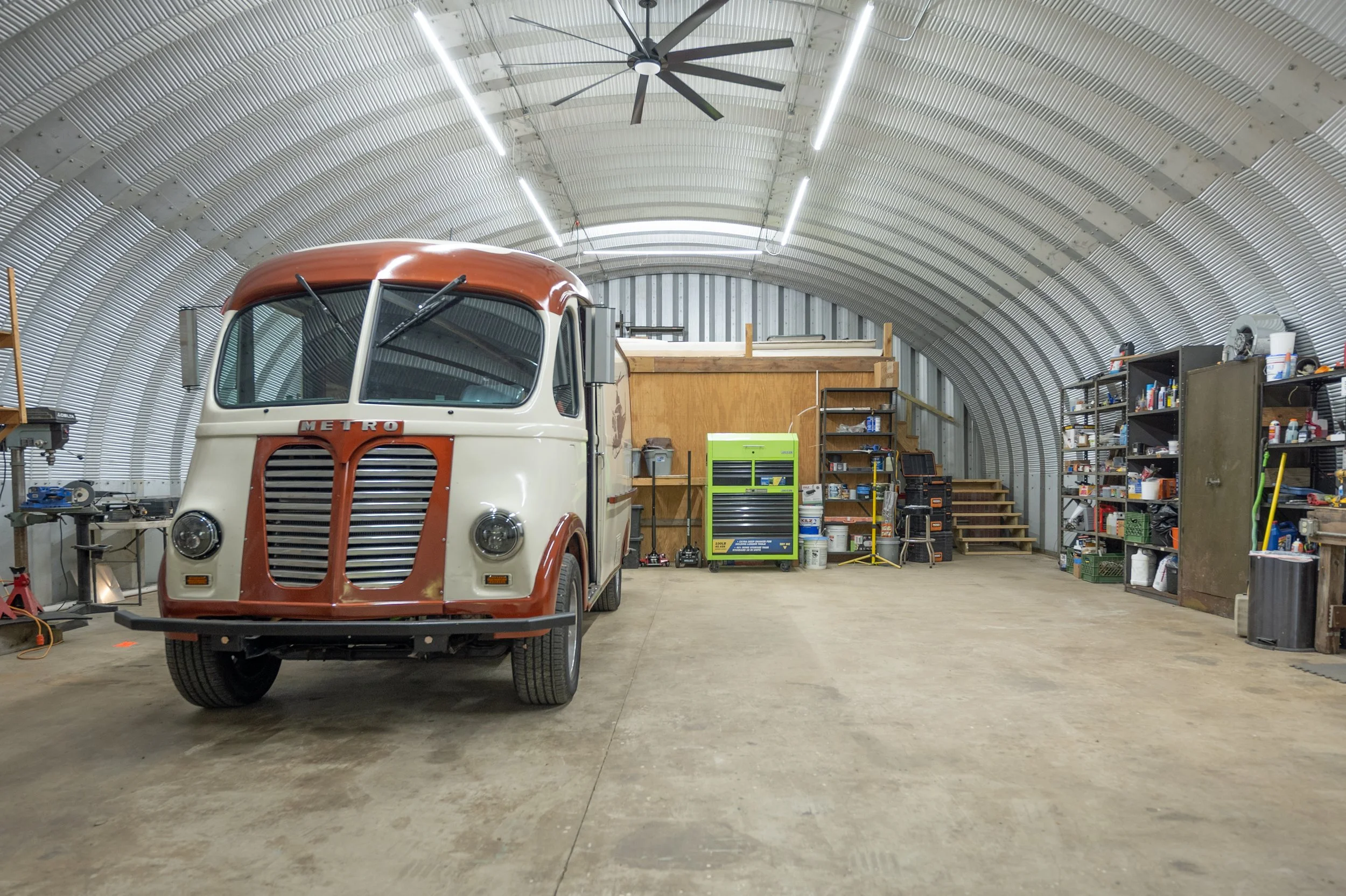
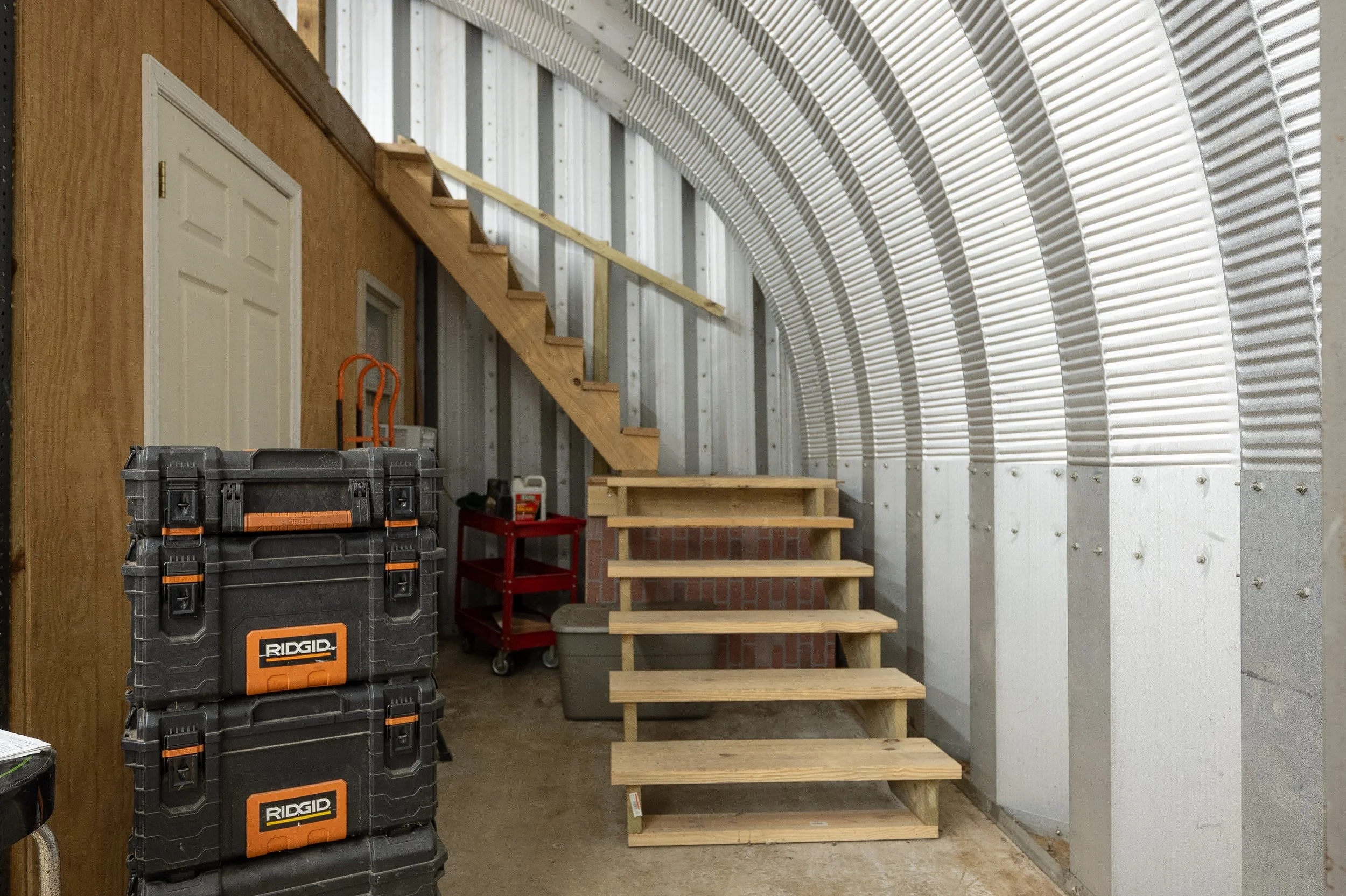
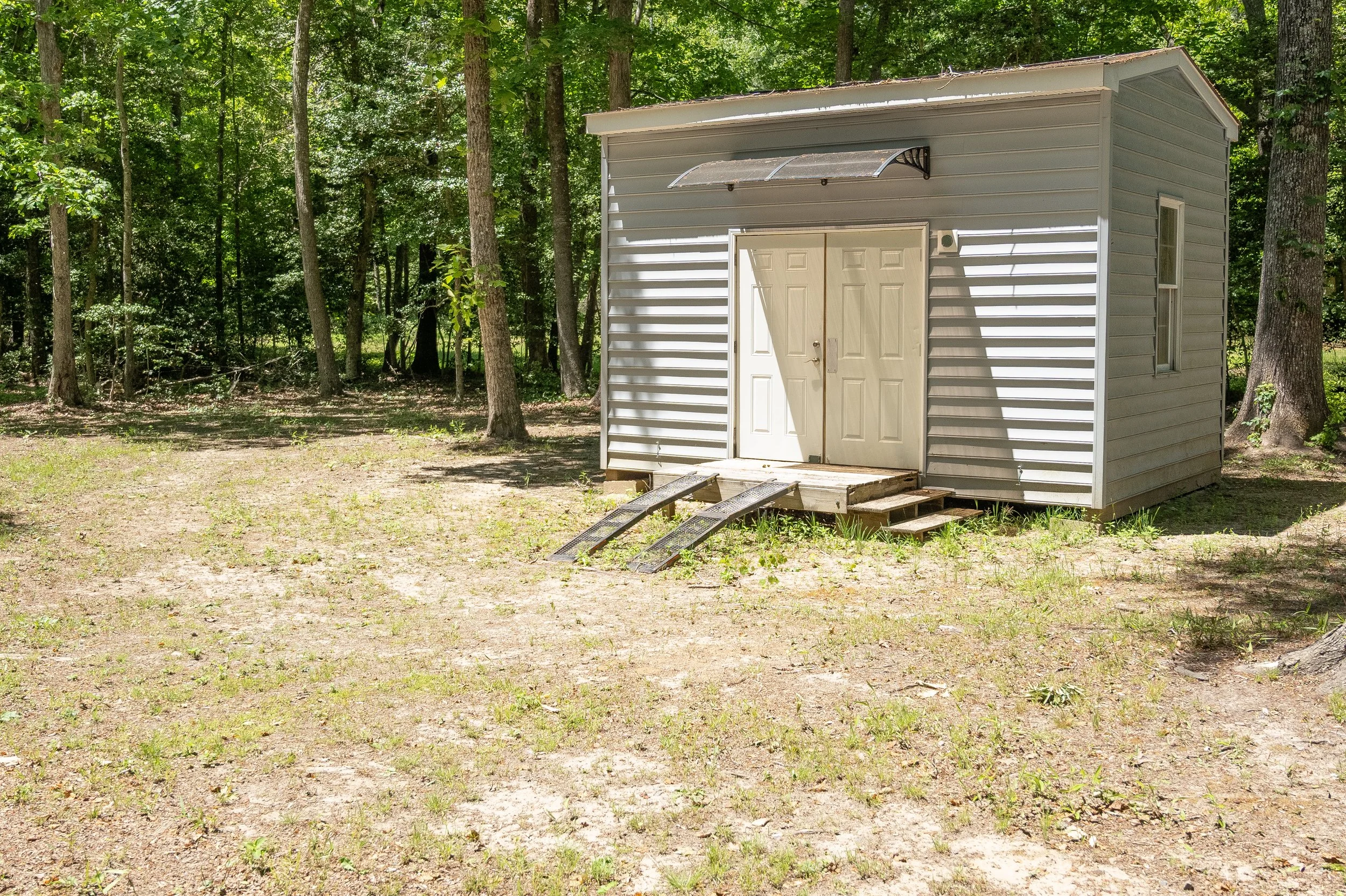
And then there is the 1,800 square foot Quonset. Standing apart from the house, the arched metal workshop is the property’s most singular feature — a cathedral of practicality for the woodworker, the boat restorer, the collector, the maker. Its scale is serious. So is the gravel apron in front of it, wide enough to maneuver a trailer, park a truck, and still have room to think. A secondary outbuilding provides additional covered storage, completing what feels less like a backyard and more like a working compound — one that has been quietly and thoughtfully assembled by someone who understands that the land around a house is as important as the house itself.
LOCATION
Interested? Let’s talk.
Emily Carter
Emily Donofrio